Be the first to comment!
NGOs, academics, and citizens urgently demand protection of Chambray’s historic barracks
 Email item Email item
|  Print item Print item
|
|
 A request for an Emergency Conservation Order for the British Barracks at Fort Chambray in Gozo has been submitted by the Coalition for Gozo (comprising Din l-Art Helwa Ghawdex, Ghawdix, and Wirt Ghawdex) with the backing of environment and heritage NGOs and hundreds of citizens, among whom eminent academics, historians, and artists.
This follows requests for the scheduling of the 19th century building made by the Coalition for Gozo that have been repeatedly ignored, it said. The Ghajnsielem Local Council is also supporting the request to grant scheduling protection to the barracks.
A joint statement by nine NGOs on Monday, insisted that “the failure to schedule the British Barracks made it possible for the Planning Authority to approve their demolition on the 13th of December, paving the way for the development of the mid-18th century fort built by the Knights into an aparthotel and apartments.
The NGOs stressed that the British Barracks should be protected for their historical, architectural, cultural and typological value. The two-storey building features repeated arched doorways and openings, creating a rhythmic and continuous façade. It overlooks the Gozo channel, commanding spectacular views of Comino.
In their request for an Emergency Conservation Order, the organisations have stressed the importance of protecting the barracks as they are unique in Gozo, and also because they are among the first, or even possibly the first, example of married quarters in the British Empire.
The NGOs explained that the building was constructed entirely in Globigerina Limestone by the same master mason who was entrusted with the construction of the Sanctuary of Our Lady of Ta’ Pinu. Research carried out by Din l-Art Helwa – Ghawdex shows that the Chambray Barracks date back to at least 1895.
They added that a late 19th century Admiralty map of Gozo held at the National Archives of Malta shows that Fort Chambray’s British Barracks were already on plan in 1895.
“In view of the fact that most of the British barracks buildings in Malta have been granted scheduling protection, even when they are not as historic as the Fort Chambray British Barracks, the exclusion of the only British barracks in Gozo from such protection remains perplexing. All historical elements and sites within Fort Chambray had been scheduled back in 2005, but the scheduling of the British Barracks was left pending,” the NGOs said.
They argued that “this was done to facilitate the demolition of the barracks to accommodate the development of Fort Chambray into a residential and commercial complex.”
The NGOs also criticised the “misleading narrative, propagated by the developers and their architects, that the interior of the building was significantly modified during the 1980s, and that consequently, only few authentic British elements of the structure remain.”
However, the NGOs pointed out that research conducted by the organisations shows that the internal layout has “remained practically untouched after 129 years. A comparison between the architectural drawing of the original plan made by the British and the plan of the building in its current state shows that the modifications made are minor.”
The NGOs insisted that “the British Barracks should be protected not only for their historical, cultural and architectural value, but also because they can easily be incorporated into a more sustainable plan for Fort Chambray. This could be a win-win situation: history restored, preserved, and repurposed for sustainable tourism and Gozo’s cultural enrichment.”
“The British Barracks building can be restored to serve as a historical interpretation centre or a community or cultural hub. The need to safeguard our historical heritage must come before any interest to generate private profits,” the nine NGOs said.
Statement signed by:
BirdLife Malta
Din l-Art Helwa
Din l-Art Helwa – Ghawdex
Ghawdix
Wirt Ghawdex
Friends of the Earth Malta
Flimkien ghal Ambjent Ahjar
Moviment Graffitti
The Archaeological Society Malta.
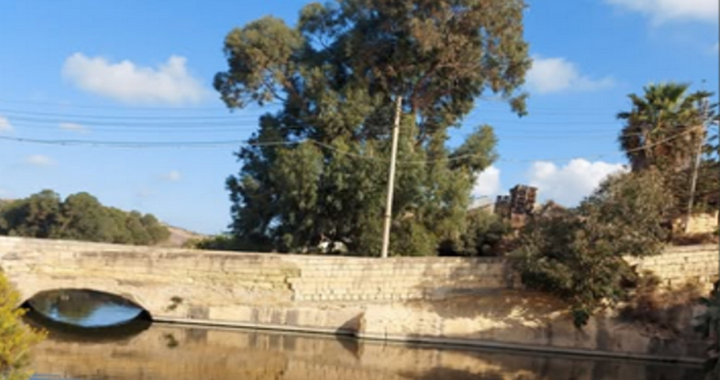
File photo: Wirt Ghawdex