Be the first to comment!
Power cuts highlight the need for climate-resilient buildings – FAA
 Email item Email item
|  Print item Print item
|
|
 Flimkien ghal Ambjent Ahjar (FAA) has warned that the widespread power outages experienced across Malta this week during an intense heatwave ”have exposed the vulnerability of both our electricity infrastructure and built environment.”
It said in statement that ”reports of people sleeping in their cars to access air conditioning, vulnerable residents struggling with dangerously high indoor temperatures, and businesses forced to suspend operations due to the loss of electricity showcases how exposed our communities have become to extreme weather events.”
While restoring and strengthening the electricity network is ”fundamental,” FAA stressed that equal attention must be given to reducing the demand placed on the grid, particularly during periods of extreme heat. ”Climate resilience cannot be achieved through infrastructure upgrades alone; it also requires buildings that consume less energy and remain comfortable as temperatures continue to rise.”
FAA noted that the European Union recognised this challenge through the Energy Performance of Buildings Directive (2010/31/EU), which Malta transposed into national law through the Energy Performance of Buildings Regulations (Legal Notice 376 of 2012). These regulations established minimum energy performance requirements for buildings, introduced Energy Performance Certificates, and have since been strengthened through subsequent amendments, including updated provisions that came into force in 2024.
FAA stated that ”not only are the standards set forth in regulations considerably diluted in comparison with what we’ve known to be required for decades, these regulations have been ignored despite of our over-population. Energy performance requirements continue to be treated by some developers as an optional exercise rather than a fundamental part of building quality.”
”At the same time, the Planning Authority and Building and Construction Authority’s permitting process is largely ignoring energy performance which need to be implemented and verified. Banks, which play a key role in enabling development through financing, are also failing energy performance considerations consistently as in project assessment,” FAA said.
FAA maintained that ”failure to align Malta’s building regulations with the EU Directive (2010) is resulting in buildings with unnecessarily high energy demand, particularly during summer. Local regulations must be urgently brought into line and enforced, with mandatory insulation for all exposed external surfaces, including roofs and newly exposed party walls.”
It went on to say that ”beyond new developments, existing buildings must be retrofitted with insulation through government incentives and bank financing. As Malta’s population and development grow, electricity demand will continue to increase. To further reduce pressure on the grid, schools, hospitals, factories and other buildings with large roofs must be required to install solar panels.”
FAA said that it believes Malta must now strengthen its approach by:
• ensuring that the Energy Performance of Buildings Regulations are enforced, with effective checks throughout the planning and construction process;
• requiring the Planning Authority and Building and Construction Authority to verify compliance rather than relying solely on declarations;
• seeing that banks and financial institutions to incorporate energy performance into development financing decisions;
• supporting energy-efficient retrofitting of existing buildings;
• promoting passive design solutions and urban greening to reduce heat stress;
• expanding rooftop renewable energy generation and energy storage where appropriate.
• requiring justification before granting permits for more hotels since their energy consumption far exceeds residential average.
FAA Environment Officer Benjamin Mifsud Scicluna stated, “we need to stop treating climate change as if it is a challenge of the future. Temperatures are rising, Maltese summers are becoming increasingly extreme, and our electricity grid is facing growing pressure. Those most affected are the residents and communities living in this country.”
He added that, ”electricity is a basic and fundamental resource, crucial for public health and well-being. Investing in climate-resilient buildings today will reduce energy demand, strengthen Malta’s resilience to future heatwaves, and help ensure that scenes such as those witnessed this week do not become the new normal.”
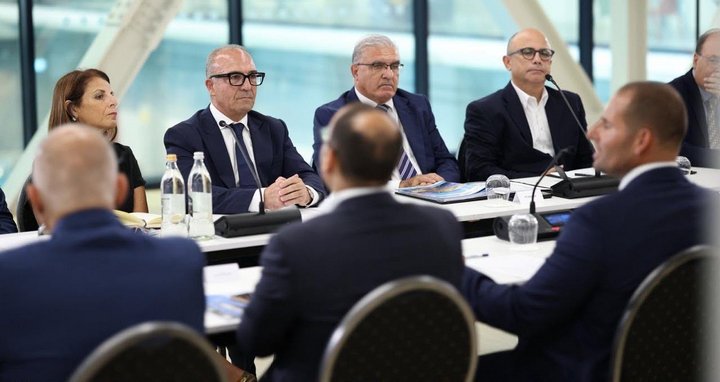
File photo