Be the first to comment!
DLHGh questions why PA saved Busbesija British Barracks, but not Fort Chambray’s
 Email item Email item
|  Print item Print item
|
|
Din l-Art Helwa Ghawdex has welcomed the decision by the Planning Authority and the Superintendence of Cultural Heritage to halt the proposed hotel development at the British barracks at Busbesija, Mosta, dating from the Second World War and the immediate post-war period.
It said that this represents a positive application of heritage policy, recognising that military structures of cultural and architectural value merit protection.
However, DLHGh pointed out that the decision also exposes a ”disturbing contradiction in the manner in which Malta’s heritage authorities apply the very principles they are entrusted to uphold.”
It stated that ”while preservation has rightly been prioritised at Busbesija, the same authorities had recommended the demolition of the Victorian British Barracks within Fort Chambray, Gozo. Heritage cannot be protected selectively, nor can our history be reduced to choosing which buildings deserve to survive and which may be discarded. Every chapter of our past contributes to our national story and must be assessed fairly, consistently and on its own merits.”
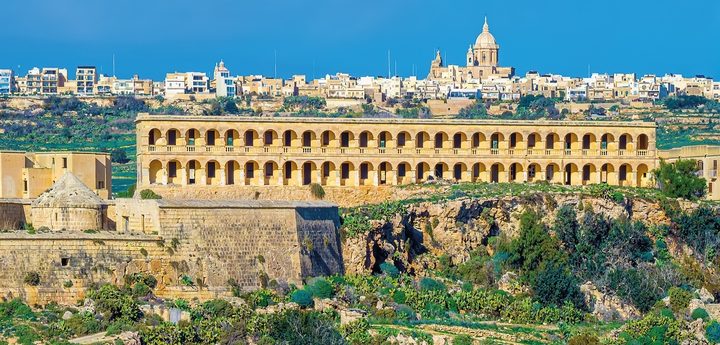
The irony is impossible to ignore, said DLHGh. Built between 1895 and 1903, the Fort Chambray Barracks are the only surviving British barracks of their kind in Gozo, the oldest surviving British married quarters in Malta and among the earliest, if not the earliest, in the Commonwealth. Situated within an eighteenth-century fortress built by the Knights of St John, they illustrate the site’s continuous military evolution over several centuries.
”Their heritage value is exceptional and irreplaceable,” it said.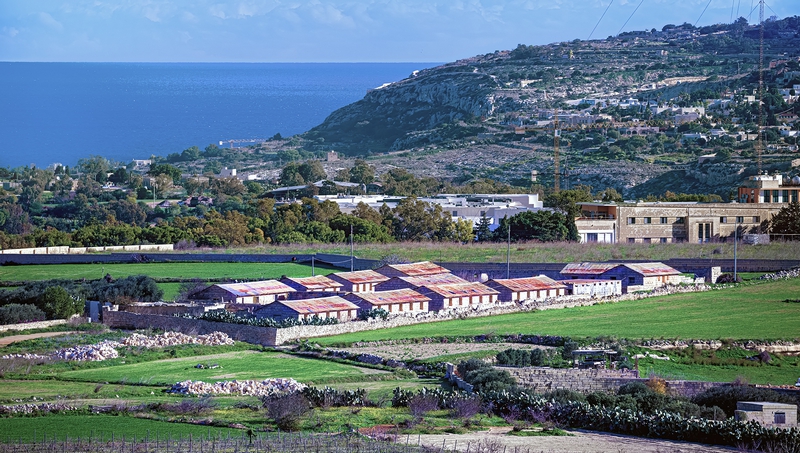
DLHGh argued that ”the State authorities cannot credibly maintain that the military heritage at Busbesija warrants protection while simultaneously sanctioning the destruction of an even rarer and more significant military complex at Fort Chambray.”
It added that ”such contradictory decisions undermine public confidence in the planning and heritage-protection system and raise serious questions as to whether conservation policy is being applied consistently or merely when convenient.”
DLHGh questioned how can these opposing decisions be reconciled with established conservation principles, including those enshrined in the 1985 Granada Convention for the Protection of the Architectural Heritage of Europe and the 1992 Valletta Convention on the Protection of the Archaeological Heritage? Both conventions oblige signatory states such as Malta to safeguard their archaeological and cultural heritage and prevent its unnecessary destruction.
It said that ”the inconsistency is even more striking in light of Europa Nostra’s position. Europa Nostra has recognised the European significance of the Fort Chambray British Barracks and explicitly called for their scheduling as a Grade 1 monument.”
DLHGh concluded by saying that ”heritage protection cannot be dictated by development pressure, commercial interests or arbitrary interpretation. It must be founded upon significance, authenticity, integrity and the public interest. If the Busbesija barracks merit preservation, the case for the full protection of the Fort Chambray British Barracks is unquestionably stronger.”
Photos: DLHGh – Top Fort Chambray and below Busbesija © Daniel Cilia