Be the first to comment!
Grand Master’s Palace Tapestries – A Belgian restoration project
 Email item Email item
|  Print item Print item
|
|
Heritage Malta has explained that during the three centuries that the tapestries have adorned the Council Chamber – or, as everyone knows it, the Tapestry Chamber – in the Grand Master’s Palace, these treasures have occasionally left their home for necessary restoration or for exhibitions abroad.
In 1910, for example, they were all taken down and sent to France, to the Gobelins manufactory itself where they had been woven some two hundred years earlier, and underwent extensive restoration.
In the years that followed, cleaning and conservation work was carried out on some of the tapestries as needed, including – in more recent years – by textile conservators from Heritage Malta.
Heritage Malta said that these interventions, together with the fact that the tapestries were exposed to very little light over the centuries, helped preserve them well.
However, a few years ago, as part of the Grand Master’s Palace restoration project, Heritage Malta said it recognised the need for extensive restoration work on the entire set of tapestries, with the aim of cleaning, consolidating, and conserving them for the future.
The work was entrusted to De Wit Royal Manufacturers in Belgium, renowned for their expertise in tapestry conservation. And so, in June 2024, the tapestries were taken down, carefully rolled and packed into specially made long crates, and transported to Belgium, where they remained for almost two years.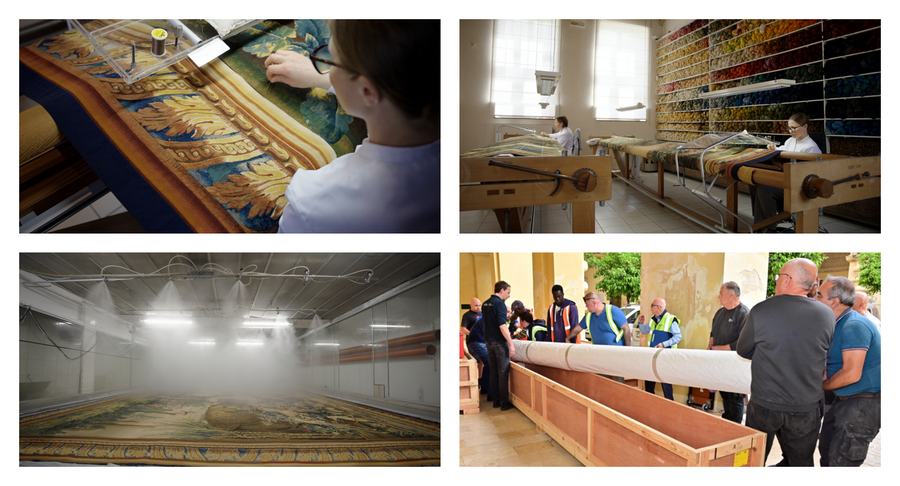 Heritage Malta further explained that the restoration process began with the removal of accumulated dust using a vacuum technique. At this stage, the hooks used to hang the tapestries in the old system were removed, and the lining was taken off so that the back of the tapestries could also be cleaned. Necessary tests were then carried out on threads of different colours to ensure that the dye would not run when wet.
The next step was to take the tapestries, one by one, into a special washing chamber, where they were laid flat face up. Heritage Malta said that ”here, each tapestry was slowly soaked using a system of water spray and special detergent, at a controlled temperature and under continuous monitoring.;;
This process continued until the water running off the tapestries changed from very dark and dirty to clean and clear, and until all the soap had been rinsed out.
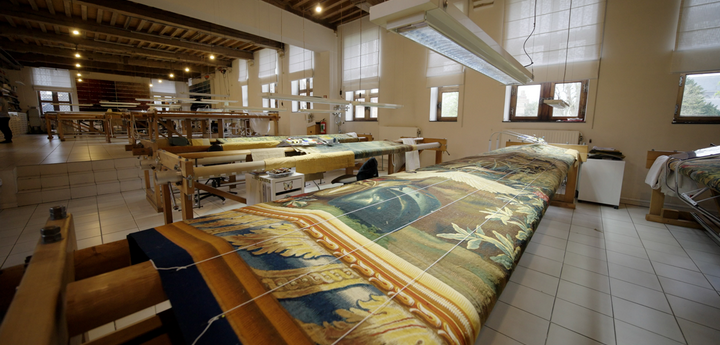
After this came the drying process – first with large towels, then with a vacuum system and fans until each tapestry was completely dry. Heritage Malta said that in another dedicated room, the necessary repairs were then carried out on the materials that the tapestries are made of, namely wool and silk. First, each tapestry was examined carefully to determine any damage, such as fraying or holes caused by insects.
Then the required interventions were carried out, including reinforcing weak silk areas with dyed materials that matched perfectly. Once this process was completed, a new lining was sewn onto the back of each tapestry.
During the time the tapestries were in Belgium, two delegations from Heritage Malta visited the De Wit laboratories in 2024 and 2025 for discussions on the ongoing restoration.
Heritage Malta said that back in Malta in April 2026, now restored to their full splendour with all colours and details standing out, the tapestries were rehung – this time with a new system offering several advantages. Among these is the improved distribution of weight and the ease with which the tapestries can now be hung or taken down.
”The end result of this restoration project – which will be enjoyed for many years to come – is the fruit borne when a team of people work hand in hand in harmony, like links in a chain complementing one another. Not just the work of the respective teams of Heritage Malta and De Wit, but also their collaboration both in Malta and in Belgium,” Heritage Malta said.
Photos: Heritage Malta