Be the first to comment!
National Cycling Strategy 2026-2036 aimed at making cycling safer, more practical, and accessible
 Email item |  Print item |
|
The Ministry for Sustainable Mobility has launched the National Cycling Strategy 2026-2036, with the aim of making cycling a safer, more practical, and more accessible option for daily travel in Malta and Gozo.
The strategy forms part of the broader ‘Malta in Motion’ vision, which seeks to provide the public with a wider range of transport options.
The strategy is built upon five key pillars: the development of connected cycling infrastructure; the improvement of facilities for cyclists; road safety and enforcement; education and awareness; and measures to encourage more people to take up cycling.
At its core lies the creation of a National Cycling Route Network, designed to provide better connections between residential areas, schools, workplaces, and public transport hubs.
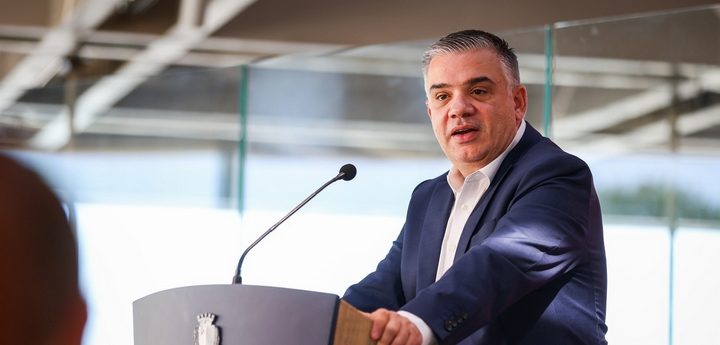
Minister for Sustainable Mobility Chris Bonett stated that the Government’s objective is not to impose a single mode of transport, but rather to create the conditions for people to have more alternatives.
“The future of transport in our country cannot be measured solely by the number of roads we build or the volume of cars that can pass through them. We must also measure it by the extent to which people have genuine options to reach their destinations,” said Minister Bonett.
He also referred to the Government’s vision which places people’s needs and their quality of life at the heart of its efforts. He noted that the National Cycling Strategy represents another step in this direction, as the Government continues working to create transport options that are safe, practical, and sustainable.
Through this strategy, he said that the Government is establishing a long-term plan that extends beyond the creation of new bicycle lanes; it also addresses the need for better connectivity, enhanced safety, and adequate facilities. This is intended to enable more people to consider the bicycle as a mode of transport for their daily journeys.
Stephanie Bonello, Head of the ‘Malta in Motion’ plan, emphasised the importance of creating the necessary conditions for more people to choose cycling.
“If we want more people to use bicycles, we must first create the conditions that allow them to do so safely. This is the rationale behind the National Cycling Strategy. We aim to build a network of connected routes, improve facilities, enhance safety, and better integrate cycling with public transport. However, just as important as infrastructure is mutual respect among all road users. Our goal is not merely to have more bicycle lanes, but to make cycling a viable and safe option for daily travel,” said Dr Bonello.
Among the measures envisaged in the strategy are improved bicycle parking facilities, connections to public transport terminals, training programmes for children and adults, and a pilot project enabling students to travel to school together by bicycle. The strategy also includes the development of guidelines for cycling infrastructure tailored to the conditions of Maltese roads.
The implementation of the strategy will be led by Malta in Motion and Transport Malta, in collaboration with government entities, local councils, and stakeholders, with the aim of making cycling a more integrated part of the country’s transport system, the Ministry said.
Photo: DOI