Be the first to comment!
National Cycling Strategy: ”Strategy without timelines, targets, or budget is without accountability”
 Email item |  Print item |
|
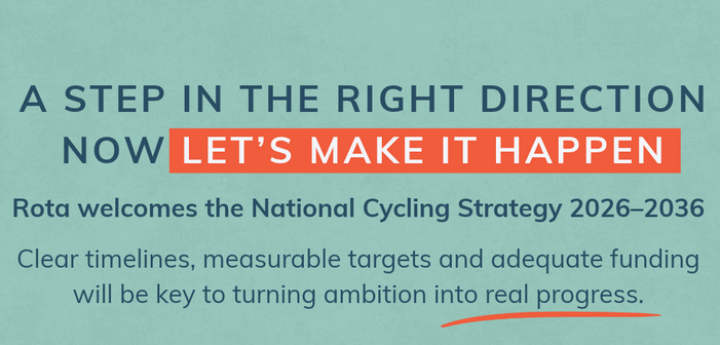
Rota has welcomed the National Cycling Strategy 2026-2036, however, it warned that ”a strategy without timelines, targets, or a budget is a strategy without accountability.”
Last week, Rota members attended the launch of the Ministry for Sustainable Mobility’s National Cycling Strategy. ”We welcome the publication of this long-awaited strategy and its recognition of cycling as a legitimate form of transport in Malta. However, recognition and ambition alone will not get more people cycling. What matters now is whether these commitments translate into meaningful action on the ground, it said.”
Rota noted that the strategy is built around five pillars that will guide the Ministry’s proposed plan of action, all of which reflect points Rota raised during the consultation process for this very strategy:
Direct infrastructure
Ancillary facilities
Regulations and enforcement
Information and awareness
Supporting cycling adoption
Over the next decade, the strategy outlines several actions, including:
Creating Malta’s National Cycling Route Network (NCRN)
Adopting and adapting the CROW guidelines
Developing guidelines for cycle-supportive workplaces, including e-bike charging facilities and showers
Introducing speed limits along NCRN routes
Opening discussions on the principle of presumed liability
Running road safety education campaigns
Offering cycling training for children and adults
Rota stated that ”these proposals include more detail than we have seen in previous strategies, and it is encouraging that input from NGOs and the cycling community has informed the document. However, consultation and the publication of a strategy are only the beginning. The real test will be implementation, and this is where the strategy falls short.”
The organisation pointed out that ”there are no clear implementation timelines, no measurable targets, and, crucially, no dedicated budget attached to the proposed actions. This is particularly concerning because the 2018 strategy included timelines. Without clear deadlines and financial commitments, there is little to measure progress against and even less to hold decision-makers accountable for.”
Rota said that it is also concerned by the emphasis on further studies and the development of guidelines. ”While research and planning have their place, they must not become another reason to postpone action. Malta has spent years discussing the need for safer cycling infrastructure. People need safe, connected routes now, not another decade of preparatory work.”
Rota therefore called on the Ministry to:
Publish a clear implementation timeline, with deadlines for every proposed action.
Commit a dedicated, costed budget to the delivery of the strategy.
Establish measurable targets against which progress can be assessed.
Ensure that studies and consultations run alongside tangible improvements to cycling infrastructure, rather than delaying them.
Publish annual progress reports detailing what has, and has not, been delivered.
Rota concluded by saying that it will continue to engage with the Ministry and the wider cycling community, ”but we will also continue to scrutinise its implementation. Malta does not need another strategy that looks good on paper. It needs the political commitment, funding and action required to make cycling a safe and practical transport option for everyone.”