Be the first to comment!
Health Directorate stops sadness from reaching local citrus
 Email item |  Print item |
|
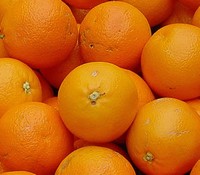 During the past weeks the Plant Health Directorate, within the Ministry of Resources and Rural Affairs, said this morning that it had stopped three citrus consignments, originating from Spain and Italy, to enter into circulation in the Maltese islands.
The Directorate intercepted these 3 consignments of citrus fruit bearing leaves and peduncles during the routine monitoring inspections carried out as part of the effort being done to control the establishment and spread of the Citrus Tristeza Virus in the Maltese islands.
The Citrus Tristeza Virus (CTV) is the most destructive citrus disease worldwide. Caused by a Closterovirus it is transmitted mainly by grafting of infected material and aphid vectors.
The disease has led to the death of millions of Citrus trees all over the world and has rendered other millions useless for production. Farmers in Brazil and other South American countries gave it the name “tristeza”, meaning sadness in Portuguese and Spanish, referring to the devastation produced by the disease in the 1930s. The symptoms are not always visible and may remain unnoticed for a number of years without affecting fruit setting and production.
Every year, since 1999, the Plant Health Directorate carries out a monitoring survey for both the CTV and its vector in different citrus orchards throughout Malta and Gozo. Around 70 samples are collected each year and tested in the diagnostic laboratories within the same Directorate. This will ensure that any outbreaks are immediately put under contingency measures and eradicated.
As part of an EU wide effort to control the spread of CTV, Malta has also declared a protected zone for this disease since 2004, in order to protect local cultivations from the introduction of the virus. This means that any movement of plants and plant material that might aid to the spread of the virus are monitored. Any imported trees for planting have to originate from authorised nurseries and certified free from the virus and vectors. On the other hand, any Citrus fruit being imported into Malta from CTV infected areas have to be free from any foliage and peduncles. This reduces the risk of transporting aphid vectors.
Locally produced citrus fruit may be marketed with leaves and peduncles as long as they originate from CTV free areas. Citrus growers within the demarcated areas of CTV findings are not allowed to market products with leaves and peduncles.
The demarcated areas within the Maltese islands are situated in San Blas and Dahlet Qorrot Valleys in Gozo. The contingency areas were set in 2008 following the discovery of infected trees in the area. These measures will end on 27th March 2012.