Be the first to comment!
Operation Turtle Dove – saving a bird on the brink – RSPB
 Email item Email item
|  Print item Print item
|
|
 Conservationists are embarking on an urgent mission to save one of the UK’s most threatened birds from extinction.
Operation Turtle Dove (www.operationturtledove.org) was launched on Thursday in the UK by the Royal Society for the Protection of Birds (RSPB), leading sustainable farming specialists Conservation Grade and Pensthorpe Conservation Trust in Norfolk, is a three-year project to reverse the decline of one of England’s best-loved farmland birds.
From The Bible to the works of Chaucer and Shakespeare, the turtle dove is well known in literature and folklore as a symbol of love and devotion. But RSPB said in a statement that “UK numbers have fallen dramatically in recent years and there now just nine birds for every 100 there were in the 1970s. Once widespread across much of England and Wales, the species has been lost from many areas. It has remaining strongholds in East Anglia and south-east England.”
RSPB said that “the cause of the population crash is not fully understood. However the birds’ diet consists almost entirely of small seeds from wild plants which grow in crops and changes in farming practices mean these plants are now scarce in the countryside.”
The project’s partners will work with farmers in turtle dove hotspots to establish plots of seed-rich plants on their land. Scientists from the RSPB will work alongside Conservation Grade’s sustainable farming experts and Pensthorpe’s aviculturalists to measure the impact on the birds’ diet and breeding success.
Simon Tonkin, RSPB farmland bird advisor, said, “Turtle doves are really struggling. After many years of decline we are facing the very real possibility of losing this beautiful bird from the UK.
“This new project will build on a lot of positive work which has already been done by farmers and conservationists. As well as putting in place measures which will bring back some of wild plants which farmland birds like the turtle dove rely on, we need a better understanding of the causes of this devastating decline.”
Tim Nevard, executive director of Conservation Grade and a Pensthorpe trustee, said the key to saving the turtle dove across Europe, and in England in particular, is to ensure the right nesting and foraging habitats are provided on farms.
He said, “Conservation Grade combines first-class farmland wildlife conservation with the best sustainable agriculture production standards, and so is ideally placed to develop the right habitats to ensure the survival of turtle doves.
“We have captive turtle doves at Pensthorpe which we will use to trial a number of seed mixtures to identify the most palatable and nutritious options – from breeding to fledging and beyond – so that the right choices about forage habitat creation can be made.
“We will be working closely with Natural England, our nationwide farmer network and commercial partners to encourage widespread uptake of these habitats.”
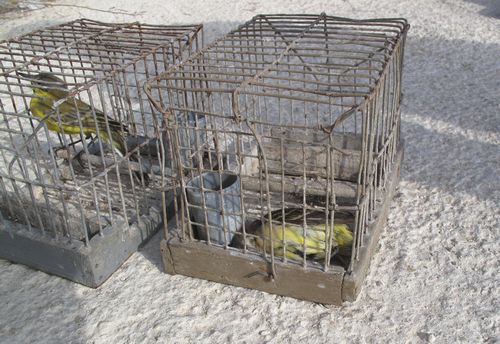
RSPB said that “other factors may be contributing to the decline of the turtle dove, including illegal hunting in the Mediterranean as the species makes its annual migration, agricultural changes in the African wintering grounds and the avian disease trichomoniasis which is common in pigeons and doves.”
Simon Tonkin added: “The story of the turtle dove in Europe is unsettlingly similar to that of the passenger pigeon in North America.
“A once common and widespread bird, the passenger pigeon was driven to extinction 100 years ago as a result of hunting and habitat loss. We must not let a tragedy like this happen in our countryside.”
The Maltese Government allowed the hunting of Turtle Dove and Quail in Spring 2012, between the 12th and the 30th of April, stating that it “makes reference to the Conservation of Wild Birds (Framework for Allowing a Derogation Opening a Spring Hunting Season for Turtle Dove and Quail) Regulations LN 221 of 2010 (as amended) and to the advice received from the Ornis Committee dated 20th March 2012, by virtue of which the Ornis Committee recommended the opening of a hunting season for Spring 2012 for a maximum number of birds that is not to exceed 11,000 turtle doves and 5000 common quails.”