Be the first to comment!
EU Ministers discuss Active Ageing Strategy in Gozo meeting
 Email item Email item
|  Print item Print item
|
|
 Active ageing is a complex challenge that necessitates multi-faceted solutions. In view of the fact that Malta is experiencing population ageing as a result of the sustained decline in fertility rates and increased life longevity, the Maltese Government has set up an ad hoc Inter Ministerial Working Group to assist in the preparation of an Active Ageing Strategy.
Work is at an advanced stage and the Strategy is expected to be launched in the coming weeks.
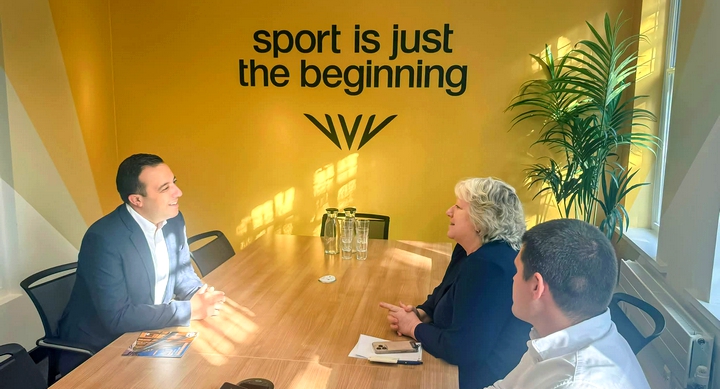
During an informal meeting for EU Employment and Social Policy Ministers held in Gozo between 10 and 11 September 2012, Ministers and State Secretaries of Employment from Malta and 10 EU members states, exchanged views and discussed strategies and policies on how to enhance solidarity between generations through the active participation of the elderly.
Minister for Justice, Dialogue and the Family Chris Said and Minister for Education and Employment Dolores Cristina stressed the importance of the contribution that older people can make to the Maltese economy and shared Malta’s experience in promoting active-ageing and in encouraging female elder participation in the workforce.
Minister Dolores Cristina stated that promoting the employability prospects of older workers by reducing and preventing early exit from the labour market is a priority for the Maltese Government. To encourage and sustain the participation of older workers in the labour market, new legislation was also introduced in 2008 through which persons of pensionable age under the age of 65 are now able to work without losing their pension entitlements, irrespective of the amount of earnings and irrespective of their age. Moreover, following the reform of the invalidity pension introduced in 2007, there has been a notable decrease in the invalidity pension population.
Minister Cristina said that as comprehensive and lifelong education policies are interlinked with employment, the economy and the labour market, Malta is already structuring adult learning with the objective of promoting employability in later years in life through the adequate supply of skills to match demand in the labour market, by means of a combination of key competences acquired through basic education and second-chance opportunities.
Minister Chris Said said that Malta is implementing various fiscal measures to attract more people, especially women, into the labour market through a revision of income tax bands, tax credits for women returning to work, childcare provision, fiscal support for part-time workers, and recognition of people working in family business.
He said with many women nowadays having children at a later age, it means that more women are staying at work within the age bracket of 25-34. The percentage of working women drops within the 35-44 age bracket, this being mainly due to child rearing. Of particular concern is the fact that many women in Malta are still not returning back to the workplace once their children are older and thus more independent. This implies that Malta faces two main challenges: that of having more women staying at work when their children are young; and that of convincing women to return to the labour market once their children are older.
Minister Said remarked that in view of the projected demographic ageing of the population in the coming years, it is important that Malta makes the best possible use of older people so that they can continue providing an important contribution to our economy. Besides allowing older people to continue working, if they so wish, there is the need to raise awareness, to identify and disseminate good practice and, most importantly, to encourage policymakers, employers and stakeholders at all levels, to promote active ageing through employment