Be the first to comment!
Seminar held in San Lawrenz on EU competition law
 Email item Email item
|  Print item Print item
|
|
A conference and training seminar for members of the Judiciary on EU competition law and its application in Malta was held in San Lawrenz Gozo today.
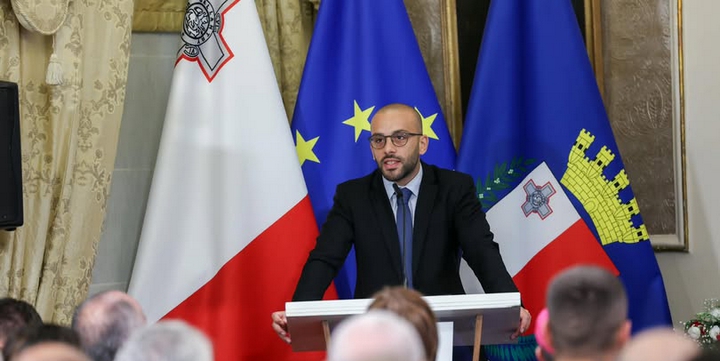
The Minister for Justice, Dialogue and the Family Chris Said, delivered the closing speech of the conference,in which he said, “For almost three years, up until January of this year, I held the office of Parliamentary Secretary within the Office of the Prime Minister and was directly responsible for the areas of Competition and Consumer Affairs. During that time I oversaw a major overhaul of these areas in Malta, mainly brought about by the setting up of the Malta Competition and Consumer Affairs Authority – an authority which has assumed the responsibilities and functions previously fulfilled by a government department and by an authority which was solely responsible for standards.
“The Malta Competition and Consumer Affairs Authority is now more than a year old and I believe that it is indeed achieving its stated aims by promoting better functioning markets and by strengthening trust between consumers and traders.
“As Minister for Justice, a portfolio which was entrusted to me earlier this year, I am currently leading discussions with the judiciary on a number of reforms which I deem very important. I am very pleased with the way we are conducting discussions and even more so because the judiciary is very receptive to our ideas and proposals especially on on-going training for its members.
“We want to keep our judiciary abreast of developments in different areas by providing them with regular training and with opportunities for professional and personal development. This conference is one such opportunity.
“Competition law is a dynamic area of law that is developing very fast within the European Union. Following this conference, I need hardly emphasize with you how important it is for you to keep pace with the rulings of the European Courts and the decisions and notices of the European Commission. This is important for the various reasons.
“Firstly, following Council Regulation 1/2003, national courts together with national competition authorities can apply Articles 101 and 102 of the Treaty on the Functioning of the European Union and they share this competence with the European Commission. It is imperative for the sake of consistency in the application of EU competition law, that these Articles are applied and interpreted in the same way as the European Commission and the European Courts. Indeed following Regulation 1/2003 it became necessary to establish mechanisms for co-operation between the Commission and the national competition authorities, the Commission and the national courts, and the national courts and national competition authorities. To this effect the Commission has issued two Notices on Co-operation.
“Secondly, we also have our own domestic competition rules, which can be applied in tandem with Articles 101 and 102 or alone in cases where there is no effect on trade. The substantive provisions in the Competition Act are modelled on Articles 101 and 102 TFEU and it is important that these are interpreted harmoniously with Articles 101 and 102. Indeed, the Maltese Competition Act reinforces and ensures the alignment of its application with EU law by requiring the Office for Competition and the Competition and Consumer Appeals Tribunal to have recourse to EU law and jurisprudence in the application of the Competition Act. Although there is no similar obligation on the national Courts when applying purely domestic legislation, no doubt EU law and jurisprudence remain an important source for interpretation for the Courts, quite apart from the fact that consistency is important to avoid conflicting decisions.
“Thirdly, national courts have an important role to play in the context of the EU State aid rules.
“All Member States within the EU have a system embracing competition law to a large extent modelled on Articles 101 and 102. This is an advantage to us, that is for both the Office for Competition and the Competition and Consumer Appeals Tribunal on the one hand and the courts on the other hand as we have a wider base from which we could draw analogies with our own cases and refer to for purposes of interpretation. Indeed during this conference, you had the opportunity to learn more about the UK experience in the application and enforcement of EU competition law.
“So far the participation of the Maltese courts in the application of the competition rules has been rather limited with very few cases being brought before them alleging a breach of the competition rules, notwithstanding on the other hand the larger number of cases dealt with by the Office for Competition and the previous Commission for Fair Trading and now the Competition and Consumer Appeals Tribunal.
“In reality, as you have heard during this conference, the role of the national courts in the application of competition law can be quite wide and the expectations would be that in the near future the participation of the Courts would increase, particularly with the recent legislative developments, notably the amendments to the Competition Act last year and the recent Collective Proceedings Act.
“From the anti-trust perspective, the Competition and Consumer Appeals Tribunal, which has a very active role to play in terms of the Competition Act, is presided by a judge. The civil courts may be called to apply the competition rules in actions relating to contracts or in actions for damages. The Court of Appeal may be called into play both for appeals from the judgements of the courts of first instance as well as from the judgements of the Competition and Consumer Appeals Tribunal; and the Court of Magistrates may be called upon for the issue of warrants in competition inspections.
“In relation to State aid you have also heard how the national courts can be involved. Most notably they may need to determine whether the case actually involves State aid in line with Article 107(1) TFEU and they may also need to order restitution of unlawful State aid. Actions for damages resulting from unlawful aid may also be brought before the national courts.
“Therefore yes the members of the judiciary are involved in the application of competition law and hence the need for the members of the judiciary and their assistants to have a sound knowledge of competition law. Indeed this is the very purpose why these conferences are so important and why the European Commission provides for projects concerning Training of National Judges on EU competition law.
“I am confident that this conference has served its purpose by contributing towards enabling members of the judiciary as well as judicial assistants to learn more about EU competition law and to keep abreast of developments in this area of law. I reiterate that government is committed towards the professional development of the members of the judiciary by providing continuous training for judges and magistrates.
“Finally, I would like to encourage the Judicial Studies Committee to seize similar opportunities that provide for training of national judges on aspects of EU law in partnership or in co-operation with other entities,” the Minister concluded.