Be the first to comment!
Open Weekend to view restoration work at Citadel bastions
 Email item Email item
|  Print item Print item
|
|
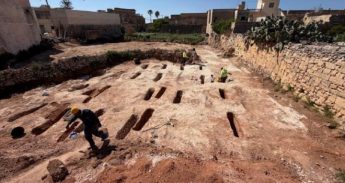
An Open Weekend is being held on Saturday the 5th and Sunday, the 6th of January, when the public will be able to view the ongoing restoration work on the Citadel fortifications. Detailed information will also be given about the process involved in this complex project.
The Open Weekend is being organised by the Ministry for Gozo and the Ministry for Resources and Rural Affairs. Qualified personnel from the Restoration Directorate will be conducting small groups of visitors around the different sites explaining the extent, nature and technicalities of the different types of consolidation and resoration interventions
Due to the restrictions of the site, it is being asked that anyone wishing to attend, register by email at: restoration.mrra@gov.mt or by phone on 22997590 or 22997688, thereby booking a definite tour time. Registrations are open until Friday, the 4th of January.
The stability of the fortifications was threatened a few years ago after a storm, when some of the rock gave way. So following studies, a system has now been created to conslidate the rock bed, involving over 230 cloves, steel nails and steel anchors which range between six and 24 metres in length. Parts of the rock that are in a bad state, will have a safety net affixed.
The damage found on the rock bed and walls of the Citadel during the preparation works was very unique. The type of stone used in the construction of the Citadel, the way it was built along with the natural processes of deterioration, resulted in a particular damage to the stone that is slightly different from the type of deterioration that is characterised on other bastions in Malta.
The restoration work on the walls includes cleaning the stone from certain harmful elements, including caper bushes that have grown in the cracks The stones will be cleaned and changed where necessary and replastering carried out.
The work on the fortifications of the Citadel is being done at a cost of more than € 6 million, 85% of which is co-financed by the European Union through the European Regional Development Fund (ERDF).