Be the first to comment!
EEA meeting highlights Malta’s poor recycling performance
 Email item Email item
|  Print item Print item
|
|
The European Environmental Agency last month noted that in the current scenario, Malta would find it extremely difficult to meet the 50 per cent recycling target set for the year 2020 from its current 13 per cent performance.
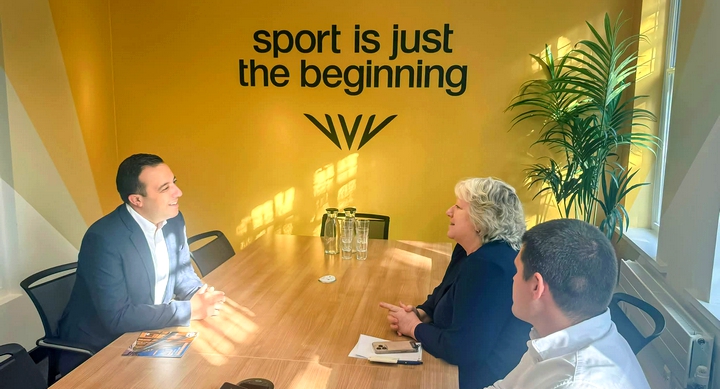
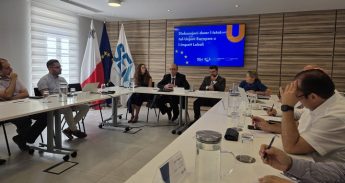
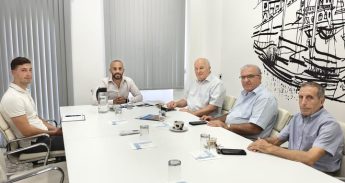
This was one of the topics discussed with Minister for Sustainable Development, the Environment and Climate Change Leo Brincat by a delegation from the Chamber of Commerce, Enterprise and Industry and GreenPak Cooperative Society. The industry delegation was composed of Malta Chamber Director General and Policy Development Manager, Kevin J. Borg and Andre’ Fenech and GreenPak’s President Martin Borg, Vice President Pierre Fava and CEO Ing Mario Schembri.
Waste originating from commerce, trade, small businesses, offices and institutions such as schools, hospitals, government departments, together with that originating from households, is classified by the EU as Municipal Solid Waste (MSW). In the latest revision of the Waste Framework Directive, at least 50 per cent of all this waste must be recycled by year 2020.
The industry representatives explained that as Malta’s waste recycling infrastructure is both disjointed and fragmented, Malta’s small size makes economies of scale difficult and next to impossible for the EU-required high recycling quotas to be achieved.
To improve Malta’s ability to increase recycling, Malta must move towards uniformity and a single industry-led recycling scheme. Those few European countries that still support fragmentation and division in their national recycling effort are, in fact, at the lower end of the European recycling league.
According to OECD and Eurostat, municipal solid waste includes such materials as paper, paperboard and paper products, plastics, glass, metals, food and garden waste and textiles. The definition also includes bulky waste such as white goods, old furniture, and mattresses.
An obstacle for increasing recycling is the small scale of the Maltese market which makes recycling expensive. Local production does not make use of recyclable materials, so that the recycled quantities need to be exported from Malta.
Therefore, to further increase domestic recycling and consequently push the recycling rates for municipal solid waste in Malta upwards, there has to be one national concerted effort led by the industry and backed by a major educational campaign.
Eleven organisations, including Malta based GreenPak Cooperative Society, have earlier this year issued a joint European manifesto explaining how the Extended Producer Responsibility (EPR) model helps countries increase recycling. The manifesto, which was presented to Minister Brincat, underlines the major benefits for Malta should it move away from the current fragmented recycling effort.