Be the first to comment!
V18 with the University of Malta launches a Cultural Mapping Project
 Email item Email item
|  Print item Print item
|
|
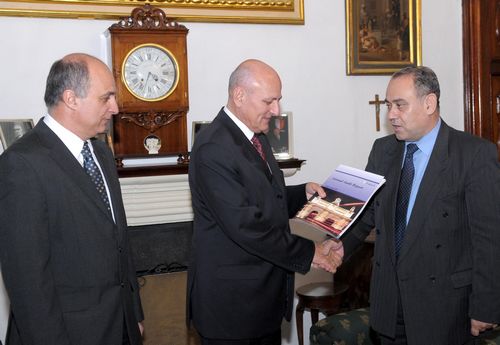
 The Valletta 2018 Foundation together with the University of Malta today launched the Cultural Mapping Project – a project that aims to generate information and analysis on cultural use and practice in public and publicly-accessible spaces and cultural venues in Malta and Gozo.
The project was launched at the Salesians’ Theare in Sliema, and is supported by the Culture and Audiovisual Unit within the Ministry for Toursim.
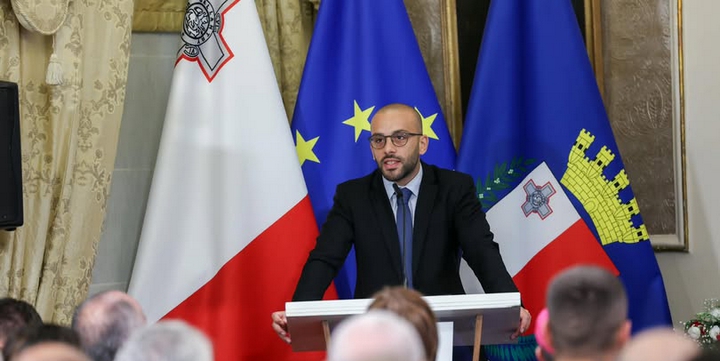
Jason Micallef, Chairman of the Valletta 2018 Foundation, said that for Valletta as European Capital of Culture to leave a sustainable and long lasting heritage, it is important that the Foundation invest in tools that help it address the challenges in the artistic and cultural sectors.
These tools, he said, would outlive the Foundation and be useful to those working in the these sectors long after 2018.
The Cultural Mapping Project is one such tool he said, that would help the Foundation understand what cultural infrastructure stock the country possesses, and therefore would be able to advise Government in an informed way. Jason Micallef also referred to the success of Story Works which is another initiative by the Foundation that aims to address the challenges in another sector, that of screen writing.
Story Works helped 24 directors and producers create a screenplay that would have the potential to sell internationally. The first part of the course was led by 3 leading lecturers from the University of Southern California.
During his address, Professor Joe Friggieri Pro-Rector of the University of Malta said that as a key player in the implementation of the Cultural Mapping Project, the University of Malta has adopted a multidisciplinary approach led and coordinated by a working group, bringing together academics from a number of relevant fields.
The aim of the project is to generate information regarding the cultural use of public spaces in various localities. The project will draw up a map of each locality in Malta and Gozo based on GIS technology that identifies the spaces, sites and venues of relevance and their basic tangible qualities.
“It will also provide an analysis of contemporary cultural activity in relation to the use of these spaces, sites and venues in connection with the communities making use of them,” Professor Friggieri concluded.
The Parliamentary Secretary for Culture Dr José Herrera spoke of the importance of projects which the Foundation is undertaking in preparation for Valletta as European Capital of Culture.
“The Cultural Mapping Project shows that Valletta 2018 will not only be about events in Valletta, but it will also contribute towards the regeneration of the various localities. This also means that our focus is not only on Valletta, as we are keeping a wider perspective on all of Malta and Gozo,” Dr Herrera said.
“Following the success of the mobile app during Notte Bianca, once again we are witnessing the digital era working hand in hand with the creative economy. The information gathered from this project will be surely used to increase knowledge of, and possibilities in, the creative economy.”
The Cultural Mapping Project takes a multidisciplinary approach, led and coordinated by a University of Malta Working Group bringing together academics from a number of relevant fields.
In the mapping exercise, the main tasks consist of data gathering and inputting relating to the identified cultural spaces and infrastructure in Maltese and Gozitan localities.
All data gathered will be inputted through a GIS-based system, in collaboration with the University of Malta’s Institute for Sustainable Development / GIS Lab (Director Dr Maria Attard).
Data will include spaces, streets, squares and venues used for a range of cultural activities that include public religious manifestations and festivities from all relevant denominations; fireworks; civic festivals; rural festivals and events.
In the analysis exercise the project will assess the status of cultural activity from the following perspectives through a specially set up Working Group:
The use and importance of the built environment;
The way spatial use and interaction at community level reflects societal developments;
The way cultural practices are defined and are in turn determined by the developments in the use of spaces in the locality;
The interaction between space and education, particularly from the perspective of social and cultural access (inclusion and exclusion);
The relation between manifestations of popular values and the uses of space at locality level;
The way community interactions are influenced by public policies and local government practices affecting the use of culturally significant space in the community;
The relationship and trends characterising the relation between economic and cultural activity at locality level.
The project is expected to generate two levels of outputs. The publication of findings relating to the scope of the project research areas, which will take the form of a printed and a final conference which will also highlight other similar European and/or international exercises.
The Project willl also produce a series of maps, itineraries, and catalogues of public spaces and venues, together with databases of organisations which make use of such spaces, indicating basic levels of usage and cultural practices associated with such spaces.
The project will be led by the following academics:
Dr Mark Aloisio – Culture
Dr Jean-Paul Baldacchino – Anthropology
Prof Carmel Borg – Education
Mr Colin Borg – Public Policy
Perit Ruben Paul Borg – Built Environment
Ms Marie Briguglio – Economics
Dr Josann Cutajar – Sociology
Dr Maria Attard – Geography (GIS Mapping)
Editorial Team:
Prof Vicki Ann Cremona – Editor
Dr George Cassar – Editorial Advisor
Prof Greg Richards – Editorial Advisor.