Be the first to comment!
Gozo takes part in International Conference on Religious Tourism
 Email item Email item
|  Print item Print item
|
|
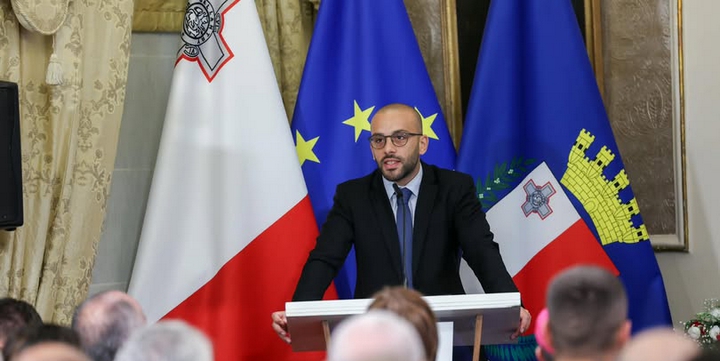
Earlier this month the Minister for Gozo Dr. Anton Refalo, was in Bethlehem, Palestine, where he attended the International Conference on Religious Tourism, with the theme Fostering Sustainable Socio-Economic Development for Host Communities.
In the first conference by the UN agency in Palestine, about three hundred participants from five different countries took part, in an event which provided a forum for tourism authorities, representatives of religious communities, the private sector, academia, international and regional development organisations, to exchange views, perspectives and experiences on how to develop and promote religious tourism as a tool for inclusive socio-economic development focusing on partnerships and initiatives that warrant the engagement and empowerment of local communities.
The Conference was organised in partnership with the Ministry of Tourism and Antiquities of the Palestinian State and the World Tourism Organisation (UNWTO).
Minister Refalo was the guest of Rula Ma’ayah, the Palestinian Minister of Tourism. Dr Refalo had several meetings with various participants there, which he said, helped strengthen future cooperation between countries.
The Gozo Minister met with Vera Baboun the Mayor of Bethlehem, and it is expected that the Mayor will visit Gozo over the Christmas holidays later this year. During the same meeting, the Minister for Gozo also met Rami Hamdallah, the Palestinian Prime Minister; Fumio Kishida, the Minister of Foreign Affairs of Japan; and former British Prime Minister Tony Blair, who made the keynote speech of the conference.
Meanwhile, together with the Minister for Gozo, at the same conference, there was also a delegation on behalf of the National Shrine of Ta ‘Pinu, led by Fr Gerard Buhagiar, Rector of the Sanctuary.
He explained how the site of Ta ‘Pinu is being embellished, with 5 new niches on the Pilgrim Way, Religious mosiacs on the facade and parvis of the Sanctuary, a new Visitor Centre to be constructed, new parking area, work is also going to continue with the planting of trees on Ta’ Ghammar Hill, creating a ‘Biblical Park,’ where visitors can sit in silence to reflect the natural beauty that surrounds them.
All this is being done, Fr Buhagiar said, with the aim of attracting religious tourism: whereby the visiting tourist to the Sanctuary is helped in his decision to become a pilgrim. This aspect of the tourist becoming a pilgrim is one of the key objectives that were discussed during the conference.
The city of Bethlehem, chosen for this conference, is the traditional place of religious tourism as our Lord Jesus Christ was born there, with havens considered sacred even by other religions.
Every year, around 2 million tourists visit Bethlehem, considered one of the most ancient cities in the world. The city’s Church of the Nativity is one of the oldest churches worldwide.
Travel and Tourism for religious purposes have been closely interconnected since ancient times. The first travels had religious motivation led by pilgrimages to the holy places of the various religions and up until today visiting the sacred places of Judaism, Christianity, Islam, Buddhism and other religions, remains one of the main motivations for travellers from around the world.
The conference discussed in detail the current situation of religious tourism and the development of competitive products and experiences, while also considering what the challenges and opportunities are for new routes of religious tourism.
New proposals were discussed on how to create religious tourism to preserve cultural heritage and at the same time helping to greater tourism development. Particular emphasis was made on the promotion of local communities to gain more economic benefits from religious tourism at home.
Resolutions of the Conference were made on the importance of those who first visit the sites as tourists, to find quiet spaces where they can stop, enjoy the natural beauty, reflect and even ask, and therefore visit again, but the second time as pilgrims, which in the end is also a socio-economic profit for the countries hosting these sites.