Be the first to comment!
‘Living with Migration: Conference by the European Parliament office
 Email item Email item
|  Print item Print item
|
|
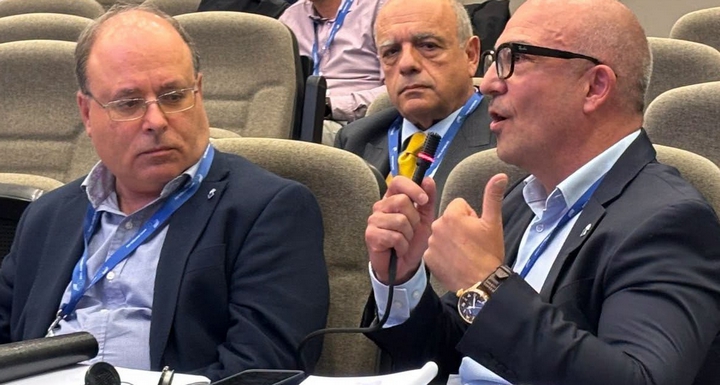
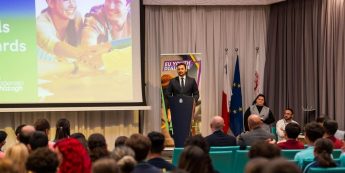
'Living with Migration' is the theme chosen for a conference held by the European Parliament office on Friday in Valletta. The conference included input by lead experts in the field, human experiences by Milos and Saleh two migrants endeavouring to integrate in Malta and a panel of employers followed by a compte-rendu by MEPs on their efforts in shaping a re-dimensioned EU policy on migration.
The effect of migration on the economy is a field that has been little explored as yet. Incoming flows of different types of migrants impact the economic life of the country in several ways. From specific jobs being filled by non-Maltese to strains on the social welfare system, from the expertise and cultural diversity that migrants bring with them to the need of ensuring that no one is exploited, living with migration presents new challenges but also opportunities.
These political, economical and sociological aspects of migration were examined in presentations by Brad Blitz of Middlesex University, Nathalie Grima from the University of Malta and Jean-Pierre Gauci from People for Change foundation.
Dr Peter Agius, head of the European Parliament Office introduced by referring to a recent eurobarometer survey putting migration as the biggest challenge for the Union according to Maltese respondents whose majority also indicate that migrants are a necessity for the local economy.
Professor Blitz remarked that Malta can receive half-a-million tourists in a few months and yet public perception may find it difficult to accept the influx of a few hundreds of irregular migrants. Blitz emphasised the need for a wider education about the economics of migration.
Professor Grima elaborated on our cultural and sociological pre-disposition on foreigners considered as outsiders. Dr Gauci focused on indicators in the job market which demonstrate integration of migrants notwithstanding the bureaucratic hurdles.
Saleh and Milos then shared their own experiences of integration in Malta. Saleh, from Ethiopia mentioned how Malta had given him the opportunity to study at University level. Yet, integrating the job market for white collar jobs is more difficult than for low-skilled jobs.
Milos described his different situation as he works in the health sector where demand is high for high-skilled jobs. Both remarked that they have established roots in Malta and would not consider returning to their country of origin.
Employers see immigration as an opportunity. Joe Farrugia from the Malta Employers Association remarked that 13% of the labour force in Malta is in fact composed of foreigners.''The job market is opening up and this is an opportunity for major competitiveness he said.
Charlotte Sant Portanier, Director at a Private Healthcare enterprise remarked that in her sector she strives for less bureaucracy in tapping foreign labour force for which there is strong demand in Malta. Abigail Mamo from GRTU said that SME face disproportionate burdens to go through the red tape of employing foreigners.
She also called on the forthcoming reforms for regulating the labour of irregular migrants not to lead to decreased competitiveness by inflating the cost of labour.
Four out of the six Maltese MEPs then took the floor. The MEPs gave account of the roles on the topic in the respective political groups and committees which are in charge of drafting the forthcoming EU laws in this area.
MEP Roberta Metsola (EPP, Partit Nazzjonalista) described her work as main rapporteur on the European Parliaments' resolution for a holistic approach to migration. Metsola stressed that in default of a holistic all-encompassing approach that looks at every single aspect of migration Europe will not get anywhere.
The report on migration on which she is lead rapporteur together with an Italian socialist MEP will insist on accountability for the EU's money to help countries in Africa get back on their feet while endorsing a strong support to return policies enabled to return back home those not eligible for protection in Europe.
Metsola also referred to the EU launch of what was called EUNAVFOR MED using military assets in the Mediterranean highlighting the need to operate closer to the Libyan shore with a viable Government in Libya.
MEP Marlene Mizzi (S&D, Partit Laburista) explained her role in the Petitions Committee as rapporteur on the committee's input to the European Parliament's resolution. She insisted on the need for accountability on the EU's money and mentioned that in her visits to Africa as part of the ACP delegation she can see first hand how EU money is not reaching the people on the ground.
"We need to provide a decent future to the migrants in their own country by ensuring that the billions of EU funds should be invested in Health, Education and the creation of employment" she said.
MEP Miriam Dalli (S&D, Partit Laburista) highlighted her role as rapporteur on behalf of the Socialists and Democrats on a new relocation mechanism in a revised European Agenda on Migration which is now to include the establishment of a permanent crisis relocation mechanism that can be activated in any Member State.
Dalli explained that the formula for relocation is to take into account the size of the population, GDP, the average number of asylum applications and unemployment rate. However, she added, "I strongly believe that the actual reception capacity and facilities available to receive people should be factored in, although these should not serve as an excuse for a member state to not improve its reception facilities."
MEP Therese Comodini Cachia (EPP, Partit Nazzjonalista) explained her role as shadow rapporteur on a report on migration in the Human Rights Committee of the European Parliament where the Parliament is striving for a pragmatic approach which recognises the participation of third countries in addressing migration challenges.
Comodini Cachia focused on the link between human trafficking and migration and the importance to shift the focus on protecting victims of human trafficking and prosecute human trafficking as a crime.
Comodini Cachia concluded by noting that the European Parliament itself need to rethink the way it tackled migration as a multi-faceted phenomenon by addressing the invisible competence barriers between competences in different parliamentary committees.
All the MEPs made calls for action on the Valletta Summit to be held on 11-12 November grouping African and European Union leaders and institutions. The MEPs interventions highlighted the need for this summit to set Union policy on track for an efficient return policy.
The conference closed with a heated exchange with the public and MEPs. Interventions included a migrant from Zimbabwe highlighting the fact that EU aid in Zimbabwe is nowhere to be felt by the locals, a Swedish worker in Malta highlighting the need for workers in Malta to ensure our pensions in the future and an intervention by a Maltese ex-ambassador who insisted that migrants are an economic burden being reprimanded by MEPs who remarked that people in influential positions should set an example to others.