 1 comment.
Update – Loggerhead turtle lays eggs in Ramla Bay Gozo – volunteers needed
 Email item |  Print item |
|
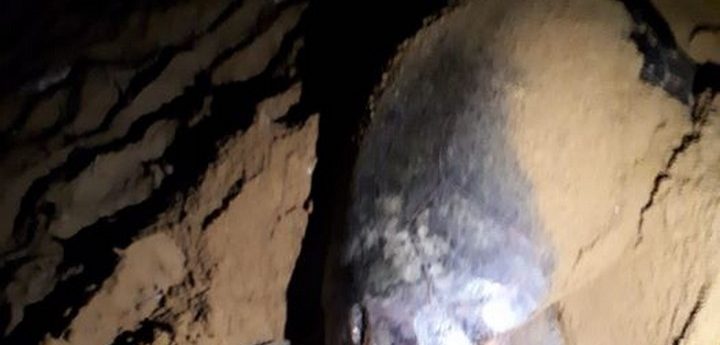
Update from Gaia Foundation and ERA below – A female loggerhead turtle was spotted laying eggs on Ramla Bay in Gozo last night. This is the first recorded and confirmed nest in Gozo after 70 years.
Nature Trust Malta said that the turtle came out of the sea at around 10pm and left around 11.30pm.
Thanks to responsible persons on the beach, Nature Trust – Wildlife Rescue were alerted and said that its NTM Gozo volunteers where on site within a few minutes to guard the female loggerhead and the nest.
The last nestings where in Malta in 2012, 2014 and 2018 – which had a successful hatching rate of 111 from 112 eggs.
NTM said that the Environment Resource Authority was immediately alerted and now ERA will decide on the most appropriate way forward to ensure that the nest is not put in any danger.
ERA will assist in the process till the hatching which, if all goes well, is expected to occur between mid to end July.
NTM went on to say that it will now be roping in its volunteers to work with ERA officials for the protection of the nest.
It explained that one particular challenge on this bay is the Ghost crab, a particular crab that may pose a danger to the young turtles when they hatch.
For this reason, NTM said that the duty volunteers will as in previous years, be prepared during the hatching to ensure as much turtles make it safe to the sea.
The organisation has also put a call out for volunteers to monitor Gozo nest (in shifts).
Anyone seriously interested in helping out should please send an email on turtle.ramla@gmail.com
NTM stressed that they will be unable to answer comments sent to the above email. Please “appreciate we are volunteers and the logistics is huge. So unless you really want to help and are committed – please do not send unnecessary emails.”
NTM appealed to the public to keep a distance from the nest and help observe the directives which will be issued by the ERA in order to make this another successful nesting.
Incidentally, in Ragusa Bay in Sicily at turtle nesting was also reported the previous night, marking an early season, just like in Gozo.
Update Gaia Foundation:
Gaia said that it is pleased and excited to announce that Ramla Bay in Gozo, which is home to the most extensive and diverse sand dune system in the Maltese Islands, has finally attracted a turtle to lay its eggs in the dunes.
Gaia said that dune systems are always very attractive to turtles seeking to lay their eggs.
The protection of the nest is being carried out through the collaboration of all connected stakeholders, namely Gaia as site Manager, the ERA as Regulator, Nature Trust as the NGO specialised in turtle protection, The Ministry for Gozo and the MTA.
Gaia has appealed to the general public to cooperate and do all it can in order to assist them all in protecting this gem of a nest.
It stressed that, “the fact that there has been very little human activity around Ramla Bay at this time, owing to the covid-19 crisis could well have encouraged the turtle to venture onto the beach, which has been a first in 70 years.”
If the hatching is successful, and the nature conservation of the site is maintained, Ramla Bay may look forward to many more turtle nests in the future, as turtles are inclined to return to and seek the very spot where they had hatched in order to lay their own nests.
Ir-Ramla, as it is called by the locals, is an important Natura 2000 site, that is, part of the European network of natural heritage sites.
The site has been under The Gaia Foundation’s management, under contract with ERA and MSDEC and their predecessors since the year 2000.
ERA statement
The Environment and Resources Authority (ERA) said in a statement on Saturday, that its officials went on site and confirmed that eggs had been laid and said that the eggs will be monitored.
They also assessed the situation to decide on immediate measures that are to be put in place to ensure that the nest is not endangered in any way.
The ERA explained that it will issue an Emergency Conservation Order to ensure more direct protection to the nesting area.
“Excessive noise and trampling in the nesting area and unnecessary artificial lighting in the area pose a danger to turtle eggs and any hatchlings which may emerge,” it said.
ERA called on the public for their collaboration in reducing such impacts. Any environmental illegality or turtle activity should be immediately reported to ERA on 9921 0404 or ced.nature@era.org.mt.
The ERA warned that the destruction of eggs or taking of eggs from the wild is strictly prohibited and constitutes a criminal offence.
“The national ‘Flora, Fauna and Natural Habitats Protection Regulations’ impose a minimum fine of nearly €500 and going up to nearly €2,400 for each egg that may be destroyed or taken from the wild,” it said.
The ERA reminded that the area where the loggerhead turtles has laid its eggs is also a protected area under the Environment Protection Act (Cap. 549) and a Natura 2000 site through the EU Habitats Directive.
The loggerhead turtle (Maltese: il-fekruna l-komuni), scientifically known as Caretta caretta is a long-living, slowly maturing marine species that inhabits tropical to warm temperate areas.
This species is classified as globally endangered by the World Conservation Area (IUCN) and is also protected by various national and international legislation. Capturing, killing, taking, and trading these turtles, as well as the deliberate disturbance of these species, particularly during the period of breeding, rearing and migration, is prohibited and subject to legal action.
Photo: NTM














Maybe it is Geraldine who was rehabilitated after found cought in nets and plastics in 2018. After eight months of tender loving care from Nature Trust’s dedicated wildlife team, she has been returned to the wild on the 25th of July.