Be the first to comment!
“No to business as usual” – AD Green Plan for Recovery after Covid-19
 Email item Email item
|  Print item Print item
|
|
 AD – The Green Party, has put forward a Green Plan for Recovery – saying “no to business as usual.”
In a statement, AD said that it looks at the future after the Covid-19 crisis and the investment needed for a new normal and for a socially responsible, ecologically sustainable economy.
AD Chairperson Carmel Cacopardo said, “now, more than ever, both citizens of Europe and people around the world understand that we can overcome the Covid-19 crisis only through solidarity and cooperation between us and between nations.”
He went on to say that, “together we can shape a new future both for our country, for the European Union, and all over the world. We want a future of social, economic and environmental resilience. Everyone must ask themselves – what kind of future do we want?”
Carmel Cacopardo stressed that recovery aid from the European Union in the form of a grant and loans of one billion Euros to Malta (until 2058), which aid could be supplemented by loans generated locally through Government bonds should be an investment aimed at turning the economy into a circular economy.
This he said, could be used to “drastically reduce pollution, and to transform the economy to operate within the limits impose by sustainability, the limits of our planet, and be at the service of people, respecting their health and the environment in which they live.”
AD’s Ralph Cassar, said that AD, together with the European Greens and European Green parties are making proposals to make the necessary change to the economy and to improve the quality of life of people. He stressed that the status quo is neither possible nor acceptable.
Explaining the document, he said that small farmers should be helped to develop local markets and that technical assistance should be provided to control and eventually substantially reduce the use of pesticides as well as to make farming sustainable.
For example, this could be done through training in best-practices and organic farming. There is also a need to protect water resources, and investment in rainwater storage, he said.
Cassar argued that, Malta should insist in EU fora for the establishment of a European Union public laboratory to ensure that essential medicines, medical equipment and medical tests are always available and accessible.
“There is an urgent need to prevent the commercialisation of scientific knowledge from hampering public health. Cooperation must have precedence over competition,” he added.
Cassar went on to say that every company, especially large ones including banks, insurance and financial services and companies that have received or will receive some form of public aid should be obliged to concretely change their operation to achieve the goal of keeping the increase in average temperature below 1.5°C.
“Any aid granted to companies should be linked, together with an obligation for a change in practices to become climate-friendly, to retraining to transition to a green and circular economy, and to eradicate precarious work,” he said. Companies that syphon off their profits offshore, to avoid contributing to society through taxes, should not benefit from any public aid.
“Our country, and every other EU member state must seriously consider together with universally accessible public services, truly decent living wages, and Universal Basic Income systems, which ensure a decent standard of living all the time, even during a crisis, including for freelancers such as artists and other self-employed in the creative industries,” said Cassar.
“The Covid-19 crisis has also shown us that the concept of smart working is feasible for both public and private entities.
“Investment is needed to in different sources of clean energy. We need energy through wind turbines, including offshore ones, micro-turbines, mandatory solar panels on every building and factory, including investment in energy from waves and solar panels at sea. The cumulative impact of small projects, such as micro-turbines, is of enormous importance,” said Cassar.
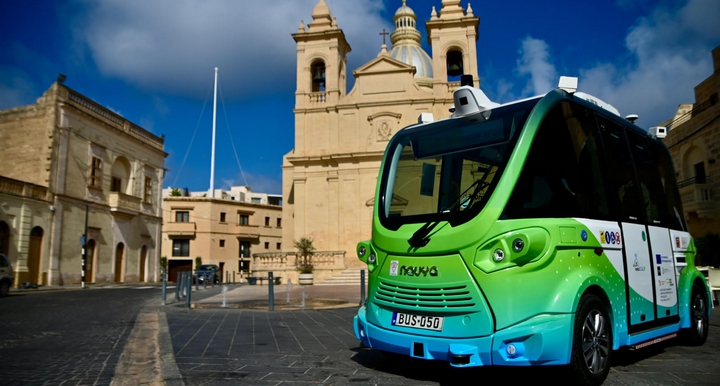
AD is again proposing measures to significantly reduce car pollution, he said. Proposals include a Bus Rapid Transit (BRT) system, safe and inclusive roads for clean transport, and extensive pedestrianisation of our towns and villages.
Extensive and Professional urban tree-planting projects are needed, both to make the roads more attractive and to reduce the effects of climate change and the heat island effect, thereby reducing the energy consumption, said Cassar.
A substantial part of EU investment should be used for safe and secure routes for bicycles, micro-scooters and electric bicycles connecting Malta and Gozo.
He also stressed that clearer rules and targets are needed to make sure that industry, hotels and catering establishments separate and reduce their waste. These should be obliged to draw up a scientific and technical plan to move towards the zero waste target.
Cassar argued that “mass tourism, with almost three million tourists a year is a huge and unsustainable burden on the country’s infrastructure, and weakens and not enhances the quality of life of residents, apart from the huge impacts on the climate. The number of hotel beds should be reduced to a sustainable number.”
The Covid-19 crisis has shown us that the digital revolution, when well-regulated and well-used, is an important part in the building of a resilient society, said Cassar. The digitalisation of public services is important, with ensuring proper safeguards aimed at reducing the risks associated with it.
“There is a need for Malta together with EU countries to build a European digital ecosystem, which is open, transparent, built on open-source technologies and ensures the protection of privacy.
Cassar concluded by saying that, “over the next few years Malta will see an increase in vacant properties once again as many foreigners who were renting have left and will not return soon. It must be ensured that this property is rented out. Whoever refuses to rent should be obliged to pay a tax on empty property.”
Carmel Cacopardo stressed that, “whoever is making excuses aimed at avoiding making the necessary investment and preserving the status quo, whoever wants to protect polluter is irresponsible.”
“There is no escape,” he said. “Malta’s climate change targets should not be kept to a minimum, a minimum is not even being met. We have to move to a new normal.”
He concluded by saying, “the economic model, the way we live and our society must be based on respect for nature, on solidarity between peoples and nations, and ultimately on respect for ourselves and for each other.”
Photo by Alain Salvary