Be the first to comment!
Ghal Ghawdex “never requested” removal of 2% stamp duty incentive on all Gozo property
 Email item Email item
|  Print item Print item
|
|
 The Ghal Ghawdex Forum has said that it wants to “set the record straight” to the Budget speech in respect of the removal of the fiscal incentive for property in Gozo.
Ghal Ghawdex stated that it “never requested the government to remove the 2% stamp duty property incentive from all property purchases in Gozo.”
Through Legal Notice 316 of 2023 published on the 29th of December, the Finance Ministry extended the the deadline for the elimination of the Gozo Property 2% discounted stamp duty rate announced in the Budget. This was meant to cease as at 31st of December 2023.
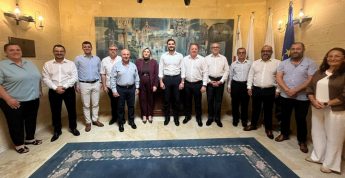
The implementation of this measure was widely attributed to the Ghal Ghawdex Forum which represents key stakeholders in Gozo including the 14 local councils under the ‘Regjun Ghawdex’ umbrella, the Gozo Business Chamber, the Gozo Tourism Association, NGO’s Din L-Art Helwa Ghawdex, Ghawdix, Wirt Ghawdex and the Gozo University Group.
The Forum said it “actively engaged” with the Government, Opposition and several Authorities before Budget 23.
Ghal Ghawdex in a statement on Thursday, clarified its position on the fiscal proposals presented to Government as part of the Forum’s 8-point plan designed to save, protect and preserve Gozo.
Ghal Ghawdex stated that it “never requested the government to remove the 2% stamp duty property incentive from all property purchases in Gozo.”
The Forum went on to say that it requested the removal of this incentive “for the sale and purchase of newly constructed apartment blocks.”
It added that this “was only one in a series of fiscal measures proposed by the Forum with the intention to shift the demand and supply of property in Gozo from the present unsustainable path to one that is more aligned with the needs of the island in the long term.”
The Forum highlighted that “the indiscriminate manner in which the incentive was removed, simply meant that a positive economic tool which could have been used wisely, was completely discarded.”
“It is undeniable that the 2% stamp duty over the years helped to boost the economy of Gozo, stimulating interest in Gozo’s numerous charming village homes, houses of character and farmhouses,” the Forum said.
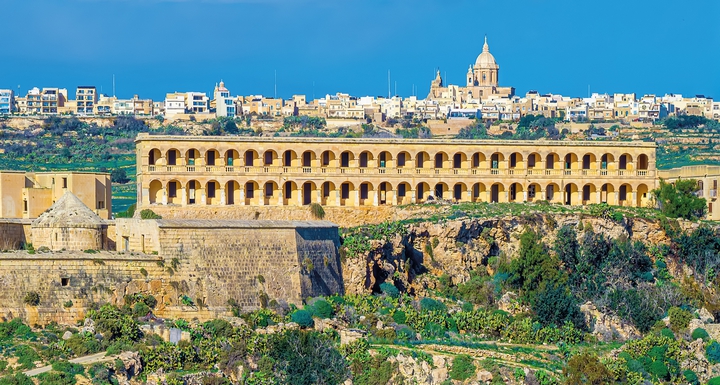
However, the Forum warned that, “it also paved the way for taxpayers to subsidise indiscriminately the purchase and sale of apartment blocks which are destroying the fabric of the island, its village and ridge skylines, its uniqueness and tranquillity and negatively changing the demographic and social norms of the island.”
Ghal Ghawdex said it had in fact proposed the following fiscal measures for Gozo:
(A) Removal of fiscal incentives ONLY on sale of buildings and land for development into apartments.
(B) RETAINING the existing incentives on sales and purchase of properties in UCA where the purchaser signs a guarantee to restore the property without subdivision
(C) EXTENDING the incentives presently applicable to UCA (including zero stamp duty on purchases and zero capital gains tax on sales of property) to include all vernacular and postwar properties in Gozo outside of UCA where buyers undertake to preserve the integrity of the property, respecting and not exceeding the surrounding traditional village heights.
The Forum said that while it noted that the waiver on the taxation imposed on property purchased and sold within Urban Conservation Areas (UCA) was retained, the Forum had also proposed a new fiscal incentive scheme for Gozo to encourage the restoration and conversion of existing large traditional properties.
“These would be brought back to life as residential homes, high-quality boutique hotels and guesthouses on condition that the fabric of the traditional property, the surrounding built environment and the existing traditional heights are respected, and not exceeded, unless it is in an area that is already heavily and irreversibly committed,” the Forum said.
Ghal Ghawdex insisted that “what the Government has done in the Budget is to remove all the stamp duty incentives applicable to Gozo in exactly the same indiscriminate manner in which it introduced them in the first place.”
“The way forward is not to eliminate the fiscal incentives completely but to remove the incentives causing harm and increasing incentives designed to support the restoration and renovation of traditional buildings to drive the economy forward in a different, sustainable and enduring manner that will stand the test of time and result in an island that remains a beacon of beauty in the Mediterranean,” it said.
Ghal Ghawdex concluded by saying that “if the Government is really serious about stopping the destruction of Gozo the way forward is to rethink the fiscal incentive schemes and to consider adopting the Ghal Ghawdex fiscal recommendations in full to place the property and construction industry in Gozo on the right path that makes sense and builds prosperity.”
Then and only then can we see the light at the end of the tunnel and truly start to believe the rhetoric about Gozo that so far is paying only lip service to the reality we see around us.
Photo: Daniel Cilia