Be the first to comment!
GRDA conference on distinct design guidelines and policy for Gozo

 Email item Email item
|  Print item Print item
|
|
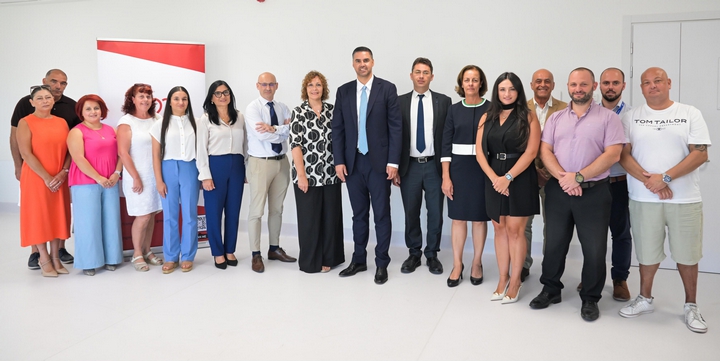
The Gozo Regional Development Authority has hosted a conference – Context Sensitive Design in Gozo – which the Authority said, “achieved its objective of fostering a fruitful discussion, from which potential solutions aimed at safeguarding the distinctive urban characteristics of the island of Gozo were derived.”
The Authority explained that the conference, which brought together stakeholders from different fora within the industry and society, was a stepping-stone towards having distinct design guidelines and policy for the island of Gozo.
A discussion document was launched on the aesthetics of the proposed building in Gozo – A process will also begin to identify areas in Malta that should also be built with limestone facades
In his intervention Minister for Gozo and Planning Clint Camilleri said that the way forward now is to start a process so that in Malta areas are also identified that should be built with limestone facades.
He said that the Planning Authority has already started to implement a change in policy as during the past week it issued a circular stating that the buildings in Gozo should have a facade made of limestone facing the street, as well as on the back facades that look on ODZ.
Camilleri stressed that this is a considered step but there is still work to be done as the document that is being launched by the Gozo Regional Development Authority lists more measures that can be taken and that will be of a benefit for the Gozitan urban fabric.
He added that there was a consensus in the conference that Gozo should be distinguished from Malta, with certain policies specifically for Gozo that go beyond building with limestone.
Camilleri went on to say that in case of applications in places subject to climatic conditions that eat the stone, such as places near the coast, the Authority may consider alternative natural materials with visual properties similar to limestone, such as travertine.
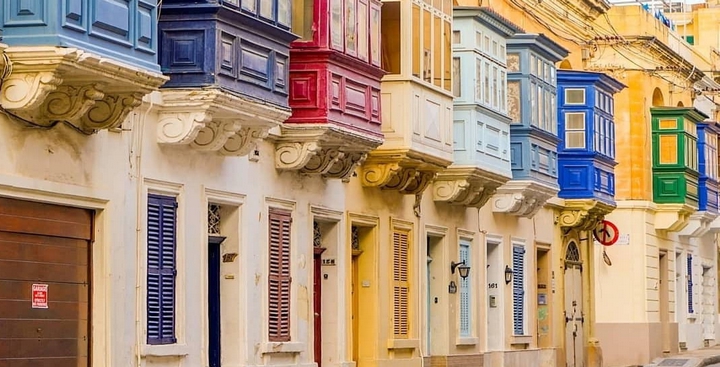
He noted that “public buildings and non-residential developments, medium and large scale developments and industrial developments in the urban areas of Gozo will also have to comply with the same conditions. The materials and colours used in the apertures and balconies on the street frontage, or any frontage located at the edge of the development boundary should fully integrate with the limestone.”
Among the various points that were mentioned during the discussion, it stood out that a professional board be appointed to look at the aesthetics of the proposed development. The Minister for Gozo and Planning also recalled a number of schemes and initiatives that are launched from time to time by respective entities or Ministries and this is to strengthen the urban character both in Malta and in Gozo.
He pointed out that the Government has “always given priority to the urban conservation areas in Gozo so much so that the help given by the Government in this regard for Gozo is more than that of Malta.”
Minister Camilleri praised the commitment of the Gozo Regional Development Authority which worked on a document that “should push forward further changes in this sector, together with the Gozo Development Strategy launched by the Authority a few months ago.”
Chief Executive of the GRDA, Mario Borg, gave an insight into the trends in the field of development in Gozo, how the Gozitans think in this field and what they are heading towards look to the future. This emerged from a survey that the Authority carried out among Gozitans themselves.
Architect Godwin Agius, who worked on the document presented by the GRDA, gave a detailed explanation of the document that includes specific measures to make the development industry in Gozo “more coherent and which respects the island’s environment.
Photo: MGP