Be the first to comment!
Mediterranean collaboration advances marine conservation and sustainable fisheries

 Email item Email item
|  Print item Print item
|
|
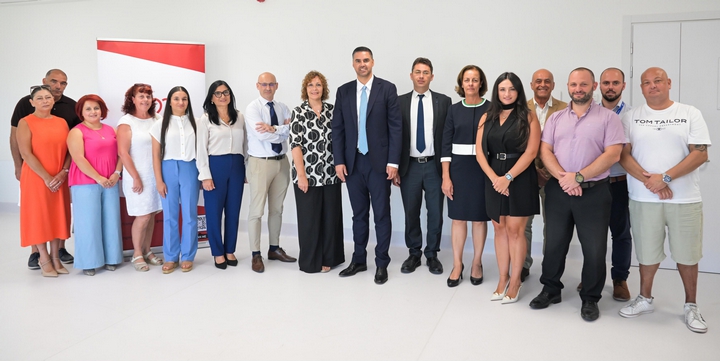
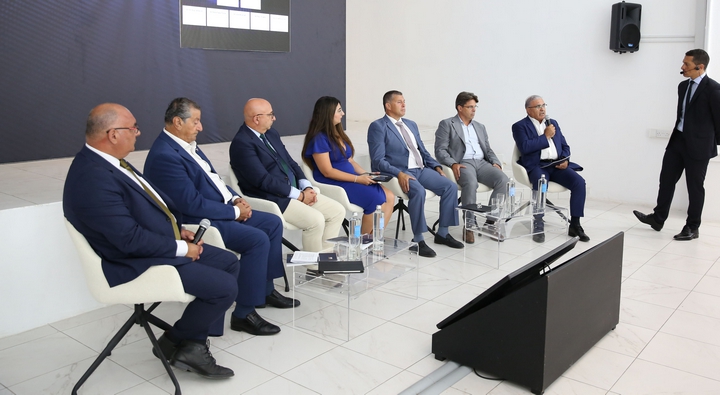
The Guardians of the Ocean conference, held earlier this month at the Xrobb l-Ghagin Park and Wildlife Rehabilitation Centre, brought together international experts, policy-makers, fishers, and scientists to advance regional cooperation and innovation in Mediterranean marine conservation.
The event marked a significant milestone for LIFE OASIS, a project co-funded by the EU that promotes sustainable lampuki fishing and the protection of marine turtles while enhancing the socio-economic resilience of coastal communities across the Mediterranean.
Parliamentary Secretary for Fisheries and Aquaculture, Dr. Alicia Bugeja Said, highlighted Malta’s recent legislative reforms, where she stated that, “we are committed to a science-informed approach that reflects the realities of our fishers. Through better communication and collaboration, we can tackle critical issues like plastic pollution and ensure long-term sustainability.”
The conference spotlighted the potential of anchored Fish Aggregating Devices (aFADs) known locally as ?imi or kannizzati, to create a small but multi-species system, known as the “oasis effect.” This supports biodiversity in the otherwise nutrient-poor Mediterranean. While aFADs offer a sustainable alternative to traditional fishing methods, concerns over bycatch, plastic use, and ghost fishing remain crucial.
Ricardo Sagarminaga, marine biologist and the LIFE OASIS coordinator from the Balearic Islands, explained how integrating social, technological, and economic dimensions is key. “Fishing technology must be adapted not only to boost efficiency but to serve conservation goals,” he said. Intelligent aFADs developed within LIFE OASIS aim to reduce bycatch, minimise environmental impact, and collect scientific data on marine ecosystems.
The panel discussions revealed that collaboration and trust between scientists and fishers are essential for successful conservation. Fishers are adopting modernised practices and are increasingly involved in turtle rescues and data collection, contributing valuable traditional knowledge.
Experts also addressed the need to move away from the “one size fits all” approach such that standardised EU protocols should also consider the regional-specificities of the lampuki fishery across the Mediterranean. This will better help manage threats like entanglement, plastic ingestion, and pollution.
Antonia Scicluna, fisheries scientist and coordinator of the LIFE OASIS project at Nature Trust FEE Malta, emphasised that “If we want to conserve our seas, we must first understand the fishers. Only then can we, as scientists, start to implement successful mitigation strategies.”
Starting out as a volunteer at the wildlife rehabilitation centre, Antonia witnessed first-hand the devastating effects of lost fishing gear on sea turtles. In the coming years, she hopes to strengthen the relationships she’s built with local fishers through past projects, aiming to close the gap between fishers and scientists and work together toward more effective solutions.
The conference stressed that conservation success depends on science or technology, community involvement, policy support, and economic viability. With contributions from leading institutions and 15 active projects under the LIFE OASIS umbrella, the initiative fosters a regional conservation network that prioritises environmental and social outcomes.
By the project’s end, key goals include:
– Deployment of improved FAD designs tailored to local ecosystems
– Strengthened marine protected areas (MPAs)
– Enhanced data collection through AI, drones, and citizen science
– A deeper understanding of the turtle-FAD interaction
– Empowered fishing communities through training, funding access, and participation.
“Five years from now, we envision a Mediterranean where conservation and traditional fishing thrive together,” said Vincent Attard, president of Nature Trust FEE Malta. “LIFE OASIS is about protecting biodiversity, but also about building stronger, more sustainable coastal communities.”
Photos: Nature Trust – FEE Malta | LIFE Oasis Project