Be the first to comment!
Monetary ‘at-risk-of-poverty’ rate is 15.5% – Survey results
 Email item Email item
|  Print item Print item
|
|
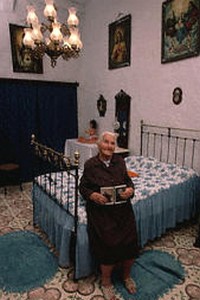 Statistics on income and living conditions for survey year 2010 revealed a monetary ‘at-risk-of-poverty’ rate of 15.5 per cent and an ‘at-risk-of-poverty or social exclusion’ rate of 20.6 per cent.
During 2010, the total number of households was estimated at 143,680, with each household reporting an average gross income of €25,968 and an average disposable income of €21,847. Both types of income edged down by around 1 per cent when compared to the previous year. Household disposable income is used to derive the equivalised income, which serves as the basis for the calculation of monetary poverty with regard to individuals.
The at-risk-of-poverty threshold for 2010 stood at €6,260. Of the surveyed individuals, 63,474, or 15.5 per cent, fell below this threshold and thus were considered to be at-risk-of-poverty. Compared to 2009, the at-risk-of-poverty rate edged up by 0.2 percentage points. In spite of the trend emerging over the past few years, this indicator for Malta remained lower than the EU average. Other main monetary poverty indicators include the S80/S20 ratio, calculated at 4 per cent and the Gini- coefficient, which was estimated at 28 per cent.
Analysis by age group shows that persons aged below 18 and those aged 65 and over were at a greater risk of being poor, with respective rates of 20 per cent and 19 per cent. On the other hand, the at-risk-of-poverty rate for the 18-64 bracket was estimated at 13 per cent.
Persons living in households with dependent children tended to be at a higher risk than those living in households without dependent children – 18 per cent and 13 per cent respectively. At 56 per cent, persons living in single-parent households registered the highest at-risk-of-poverty rate, as in previous years. The at-risk-of-poverty rate for persons living in households with a work intensity of zero stood at 36 per cent for households without dependent children and 71 per cent for households with dependent children. As expected, a negligible at-risk-of-poverty rate was registered among persons living in households with full work intensity.
The SILC may also be used to derive a number of non-monetary indicators. Of particular importance is the proportion of persons living in households that were deprived of at least three of nine deprivation items, which was estimated at 15 per cent. Also, around 6 per cent were living in households that were deprived of at least four out of these nine items; this classifies them as severely materially deprived households.
In addition to the monetary at-risk-of-poverty indicator, NSO is publishing an indicator on at-risk-of- poverty or social exclusion, which is targeted towards persons aged below 60. The latter is one of the indicators currently being used to measure sustainable and inclusive growth, which forms part of the Europe 2020 Strategy. This indicator also takes into consideration severe material deprivation and low work intensity.
In 2010, the at-risk-of-poverty or social exclusion rate stood at 20.6 per cent, below the EU average by nearly 3 percentage points. From a breakdown of this rate, a trend similar to the monetary at-risk-of-poverty rate emerged, where the younger age groups tended to be more vulnerable than their older counterparts.