Be the first to comment!
Discussions on Enemalta at an MCESD and MHRA meeting
 Email item Email item
|  Print item Print item
|
|
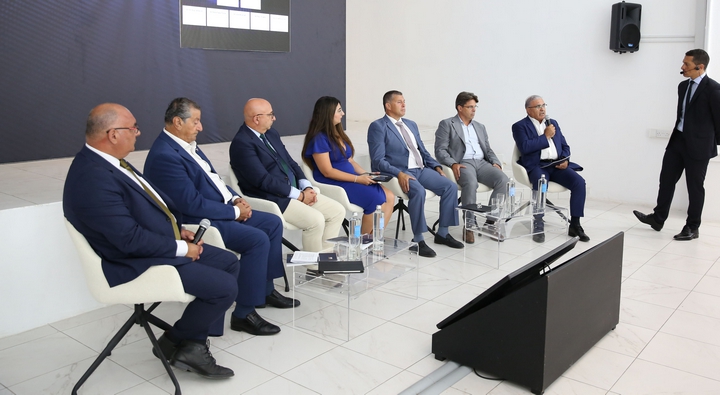
The Malta Council for Economic and Social Development met today at the request of Malta Hotels and Restaurants Association, to discuss Enemalta and the impact of the energy rates on the hotel and restaurant sector.
Tony Zahra, President of MHRA made a presentation to the council pointing out that Tourism represents 30 per cent of Malta’s GDP, employs thousands of people and impacts practically every person in Malta. The Hotels and Restaurants are key components to the long term sustainability of the tourism industry.
The President explained that “during the last 3 years the hotel industry has seen increased arrivals, increased bed nights and increased room rates leading to increased revenue however all of this increased revenue has been eaten up by increased costs. The sustainability of the hotel Industry is now in question. One of the major contributors to these increased costs is Enemalta and MHRA is concerned that inefficiencies at Enemalta are seriously impacting the industry through the cost recovery system leading to very high energy costs. MHRA drew the council’s attention that Enemalta has a permanent derogation making it a permanent monopolist in the supply of energy.”
Mr Zahra then went on to explain that “Hotels and Restaurants in Malta are subject to the highest electricity prices across the EU. Indeed, whilst locally established medium-sized enterprises pay the highest prices in the EU, households face the second highest prices. Without any doubt, such a swift increase in energy prices is negatively affecting the profitability of businesses which in turn dents the competitive edge of Foreign Exchange earners such as the industry of hotels and restaurants.”
“Enemalta’s ever-increasing inefficiencies following the surge in the price of oil were for some time absorbed by government but since 2006 the burden of higher oil prices has been shifted towards the consumer. After many years of under-investment, Enemalta’s electricity generation efficiency rate currently stands at a very low 31.5%. In simple terms, for every €1 of oil that is burnt, the extent of electricity produced stands at €0.31, 5. Moreover, at present, electricity revenue is circa 25% due to high distribution losses some of which can be explained and others can only be put down to non charged output,” Mr Zahra said.
“Whilst average power efficiency in Europe stands at 72%, that for power thermal plants (similar to Malta’s generation plants) is circa 50%. If Enemalta were to increase its energy efficiency transformation rate to 50% and reduce its workforce by 25%, utility bills of hotels and restaurants would drop by €9.0 million a year or €0.04,2 per kWh,” Mr Zahra concluded.
Enemalta made a presentation to MCESD about the impact of Geo political issues on the price of oil and its impact on Enemalta costs.
Enemalta also stated that by July 2012 the Delimara extension will be commissioned and that it will have 47% efficiency. Enemalta, also confirmed that by October 2013 the interconnector will be in place.
Consequently the generating capacity efficiency in Malta will go up to 40% by 2012 against the present 31.5% and when the interconnector will be in place this will impact further the efficiency. Enemalta said that it expect that all the efficiency gains will be passed on to the consumers.