Be the first to comment!
New ICT awareness programme launched for senior citizens
 Email item Email item
|  Print item Print item
|
|
Thanks to the sustained improvements in health services the demographic landscape of Europe has changed and is still changing in no unmistakable ways. Increasingly, the demographic composition of our societies is becoming increasingly characterised by an ageing population, which is now relishing longer and better quality of life.
The same demographic pattern is present in the Maltese population as well – in fact the topic of an ageing society now frequently features in the discourse during key academic and political fora.
Often, such discussions gel around the need to devise policies that keep our elderly active and socially engaged, particularly by promoting the meaningful use of web-based technologies, which thus help them remain socially inclusive.
Invariably, ICT nowadays plays a key role in many care professions and is being adapted in situations that range from the way the elderly communicate with their relatives and acquaintances to dealing with a host of health improvement matter such as mobility and cognitive issues, which may become more prevalent in an ageing society.
In a nutshell the internet is revolutionising the way society at large interacts and there are clear indications that the elderly, particularly in the northern European countries, are increasingly embracing the use of technology in their daily lives.
Local studies however, illustrate that this trend has not picked similar momentum because over 67% of those over 55 years of age have never actually used the internet. This segment of the population is clearly not gaining any of the advantages of ICT and the internet and is unlikely to be leveraging on the benefits that these technologies offer.
Having identified such need the Malta Communications Authority, has teamed up with the Parliamentary Secretariat for Rights of Persons with Disability and Active Ageing, and the Active Ageing Unit, to launch a new awareness programme which aims to help senior citizens discover the potential benefits of the most commonly used online ICT tools, with an emphasis on the use of social media.
Currently this programme is starting off in Malta, however the MCA and the Parliamentary Secretariat for Rights of Persons with Disability and Active Ageing are also planning to launch similar programmes in Gozo in due course.
The underpinning objective is to encourage ageing individuals to embrace ICT and integrate it in their own lives. More specifically, this short programme is intended to assist eligible individuals in developing online social skills that in turn will help them to remain actively engaged, without compromising their social contact within their immediate social fabric.
It will, instead help them to widen their circle of friends as well as facilitate their contact with their extended families. An added benefit of acquiring knowledge on the use of the internet is certainly to help the elderly keeping abreast with what is happening beyond their usually close-knit community of friends and relatives.
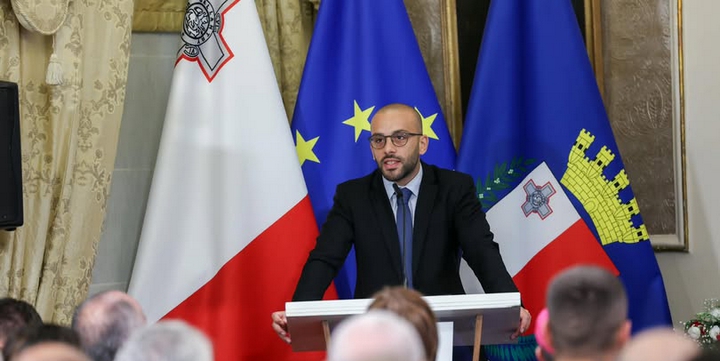
José Herrera, Parliamentary Secretary for Competitiveness and Economic Growth said that “a digital society constitutes the corner stone of a dynamic digital economy, which is playing an ever increasing role in the national income growth and is a major source of employment creation.”
He added, “taking this into the contest of what we are rolling out today we are now witnessing a growing importance of what is being dubbed as the ‘silver economy,’ which is merely the economic activity generated specifically by the senior citizens across many modern societies, including the Maltese society.”
Justyne Caruana, Parliamentary Secretary for Rights of Persons with Disability and Active Ageing said that “this project is incorporated with the Parliamentary Secretariat for Rights of Persons with Disability and Active Ageing’s initiative of transforming Day Centres to life-long learning hubs.”
Dr Caruana said, “this initiative’s aim is for older persons to start appreciating digital technology in all life aspects. In today’s world, digital technology is a very important means of communication and thus older persons should have the opportunity of using such technology.”
Roderick Marmara, MCA Information Society, stated that “Citizens in an ageing Maltese population are at greater risk of social exclusion with considerable negative consequences for their independence and quality of life.
“Therefore continuous life-long learning plays a significant role as it can help to address many of the related challenges and opportunities, such as older people’s participation and contribution to the economy, re-skilling and up-skilling in the knowledge based information society and inter-generational sharing of experience and knowledge.”
The information sessions are geared to deliver succinct information about the use of the Internet so that participants will maintain interest and capture the core concept of social media and the Internet without any complex technical jargon.
The sessions will be delivered in 7 day-centres across Malta and will be free of charge. The MCA is fully sponsoring these sessions as part of its initiatives to narrow the digital divide across different strata of the Maltese Society.
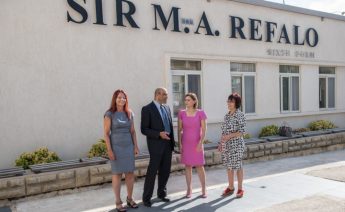
Photograph: DOI/Reuben Piscopo