Be the first to comment!
Work…and Addiction? Working towards an inclusive workforce

 Email item Email item
|  Print item Print item
|
|
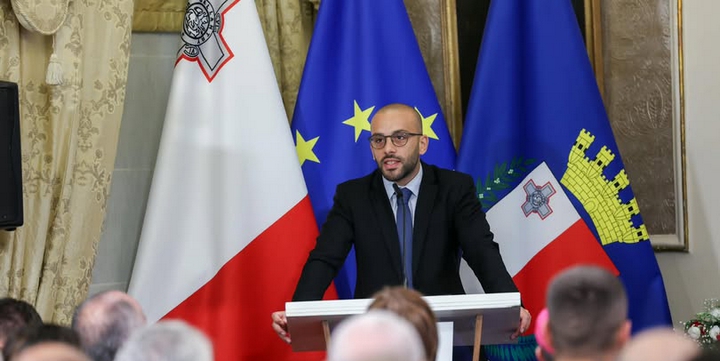
“We should be working more towards an inclusive society, where no one should be left behind, whether with addiction or any other social problem,” said the President George Vella, during a conference today on Work and Addiction.
The OASI Foundation, together with the Northern Region, organised a National Conference under the Distinct Patronage of President Dr George Vella, with the title ‘ Work…and Addiction? The conference was held at Dolmen Hotel and was moderated by Mr Peppi Azzopardi.
Dr Michael Falzon, Minister for Social Policy and Children’s Rights, mentioned that everyone deserves a second chance in his video message.
He remarked about the reality of the problem of substance abuse in Malta and said that there are two things one could do with this reality; ignore or have the courage to deal with these issues.
The Minister also encouraged everyone to deal with the issues related to addiction and instead of being judgemental, serve as a helping hand. He highlighted the importance of work, adding that it gives personal dignity.
David Agius, Deputy Minister for Inclusion and Quality of Life, thanked OASI for organising such an event and emphasised talking about addiction issues. He added that working together on policies regarding this matter is essential.
In a video message, Mr. Clifford Galea, President of the Northern Region, spoke about how essential it is to discuss different aspects related to addiction. Ms Anne Marie Fenech Adami, Vice President of the Northern Region, thanked OASI for this conference to discuss matter of addiction and remarked that both the employee and employer are affected in such cases.
In the first part of the conference, Mr Matthew Degiorgio and Charlie Mifsud, on behalf of RISe Foundation, Mr Anthony Camilleri representing YMCA and Ms Miriam Agius, a Senior Social Worker at Mount Carmel Hospital discussed the barriers that could interfere with employment.
They gave recommendations to help build an inclusive workforce, homelessness statistics in Malta, and the importance of work as it allows one to connect and be socially involved. All of them emphasised the importance of “opening doors of opportunity for people who have a problem and seek a job.”
In the second part of the conference, Dr Manwel Debono, a Senior Lecturer at the Centre of Labour Studies, emphasised that people working in HR should recognise that the place of Work could hinder or start the addiction problem awareness is essential.
Mr Ivan Refalo, on behalf of the Malta Employers Association, remarked about the importance that employers should be informed and encourage and help the employee seek professional help if needed.
Dr Roselyn Borg Knight, a lawyer, commented on the significance of prevention before the problem got worse and remarked on the importance of polices and collective agreement at Work between the employer and employee.
Mr Noel Xerri, Chief Executive of OASI, emphasised that from statistical information gathered from people who contacted OASI in the previous year, addiction is present in all strata of society, which is due to the process known as ‘the normalisation of substance use.’ He stressed the importance of having the person as the focus of any operation, and that persons with addiction should be approached with a helping hand.
He remarked that “one should look at what policies are in place at Work and whether these policies help people with a problem or indirectly enable addiction.”
Xerri also stated the importance of having local studies done to show the best practices to be adopted at Work to help both the individual and the employer.
President Dr George Vella, closed the conference by saying it was a well-needed conference. He stated that in the past, addiction was considered “taboo.”
He remarked that dependency is a complex phenomenon and that no one should be excluded from working. He emphasised that it is crucial to help dependent people and that empathy and reciprocal respect are essential tools to help fight the stigma associated with dependency.
Dr Vella also said this is something of concern, and to defend society, it is necessary to invest in education as children will absorb these messages and keep them in mind. He closed his message by remarking that every story is different, and we should never condemn people who have a dependency but respect and understand them.
The audience was an active participant in the National Conference and included representatives from different fields, including government agencies, non-governmental organisations, and persons working in HR.