Be the first to comment!
Regulations launched for electric vehicle public charging stations
 Email item Email item
|  Print item Print item
|
|
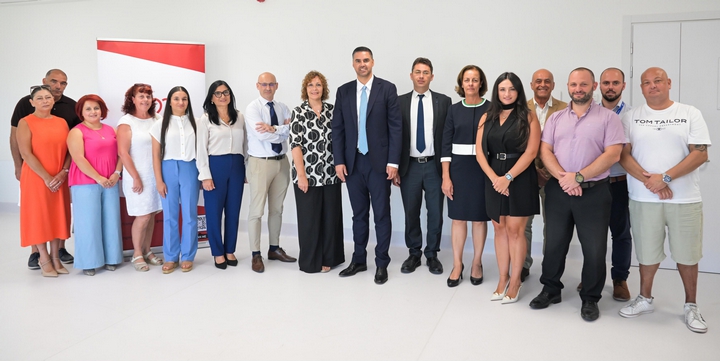
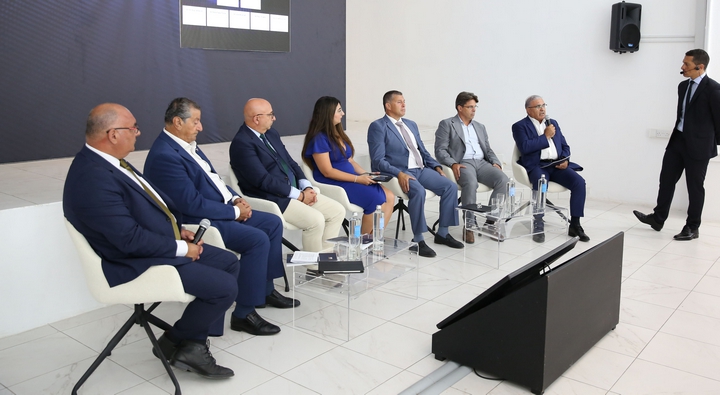
 The first national policy and regulations in Malta for publicly accessible electric vehicle charging stations have been launched by the Ministry for the Environment, Energy and Enterprise and the Regulator for Energy and Water Services (REWS).
They explained that the aim is to provide a holistic framework for the operation of publicly accessible electric vehicle charging stations opening up the market to private operators who wish to invest in this emerging sector.
A potential investor would require an authorisation issued by the regulator. This does not affect the operation of charging points installed for own personal use or for the use of an entity’s own vehicle fleet – in such cases, an authorisation is not required.
They said that to facilitate the process, a one-stop-shop and a helpline, 144, are being set up with the support of Business First and Malta Enterprise.
Minister for the Environment, Energy and Enterprise Miriam Dalli said that, “by regularising the sector, the government is opening up the public charging infrastructure market to private operators, thus increasing services provided.”
She added that,”the regulations will also support the green economy: as the demand increases, so will opportunities for green jobs.”
The government said that last year it rolled out among Europe’s “most advantageous tariffs for the charging of EVs, thus enabling and further encouraging the use of EVs. The number of EVs and plug-in hybrids on Maltese roads stands at around 10,000 vehicles today.”
Data published by the National Statistics Office showed that, as at end July 2022, electric and plug-in hybrid motor vehicles accounted for 2.3% of the entire vehicle stock, with a total of 9,452.
REWS CEO Marjohn Abela explained that the new policy and regulations will encourage a shift away from fossil fuels, allowing the country to become more efficient in its use of energy whilst increasing its commitment towards climate protection.
Additional information was made available as follows:
The application for the authorisation is available on the REWS website. A non-refundable application fee of €500 applies. The authorisation to act as an operator of publicly accessible charging points is valid for twelve years and may be renewed against a fee of €500.
The authorisation may be obtained before the installation of any charging point. However, the authorisation holder is obliged to register the publicly accessible charging point/s with the regulator within fifteen days as from the date of the commissioning of such charging point/s. The authorised operator must also notify the regulator within one day from the date of decommissioning of such charging point/s.
The charging point registration form can be downloaded from REWS’s website. An authorisation fee of €75 per charging point is payable on registration of the charging point and thereon every three years from the date of issue of the authorisation to act as an operator of the publicly accessible EV charging infrastructure.
The authorisation fee per charging point, due when a charging point is registered for the first time, will be calculated pro rata with respect to the particular three-year time period.
Any decision of the regulator may be appealed to the Administrative Review Tribunal.
Any queries for further information related to such regulations may be forwarded to regulator@rews.org.mt.
For more information can be found by clicking here.