Be the first to comment!
GRDA and Ghal Ghawdex seek to converge on Ghal Ghawdex Eight Point Plan
 Email item Email item
|  Print item Print item
|
|
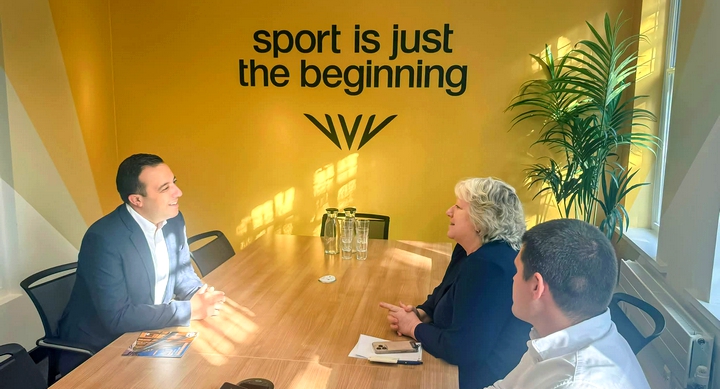
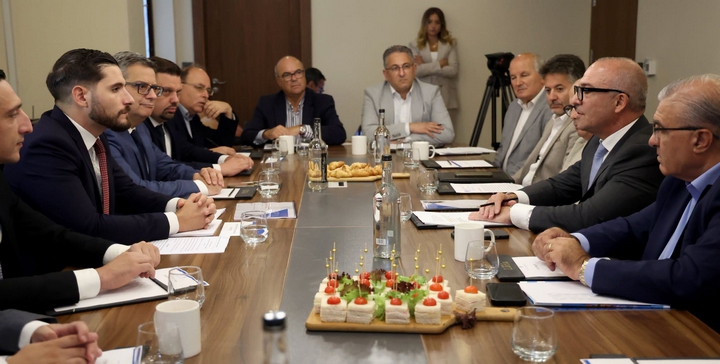
 The seven stakeholders within the Ghal Ghawdex Forum and the Gozo Regional Development Authority (GRDA) held a formal meeting to discuss and find convergence on the Eight Point Plan launched by Ghal Ghawdex. This meeting followed the publication of the GRDA reaction to the proposed plan.
In a statement on Friday, the Forum said that both GRDA and Ghal Ghawdex Forum are in full agreement on “most of the proposals” with full agreement on point 1, namely the urgent need for the development of a specific spatial plan for Gozo, clearly differentiating Gozo’s rural and urban planning from Malta’s, and in line with Gozo’s status. There is also full agreement on points 3 and 4 concerning the use of fiscal incentives to direct the construction and real estate market towards more desirable outcomes.
Both GRDA and Ghal Ghawdex emphasised the urgent need to remove the “indiscriminate nature” of the existing reduced stamp duty measure currently in place which is applicable for all type of residential properties in Gozo, and agree that any fiscal incentives in this area need to be re-directed towards sustainable construction that adds long-term value to Gozo.
GRDA and the Forum said that they are also in full agreement on point 5, ensuring Gozo`s distinctiveness by designating Gozo as a ‘design priority area,’ enforcing stricter architectural standards and use of traditional features that complement the surrounding areas.
On point 8, concerning correct interpretation and strict enforcement of current policies, rules and regulations, the GRDA and the Forum again both agreed, and added that they expect “utmost importance to be given to policies G1, G2 and G3 of DC2015, by the Planning Authority, when delivering its decisions.”
The Forum explained that these policies refer to the urban landscape and preservation of a distinctive Maltese identity, the visual impact on townscape and protection of skylines, and the relationship between new and existing buildings to respect the existing streetscape with gradual incremental transition to safeguard sensitive areas.
Proper and correct interpretation of these policies as highlighted in Court Rulings, among others Falzon vs Awtorita’ tal-Ippjanar (Appell) (15/03/2023), “would resolve numerous issues which were the cause of undesirable outcomes during the last few years, they said.
The GRDA and Ghal Ghawdex said that they “broadly share” the same views on point 2(c), whereby ODZ should be preserved and hence applications for developments in such areas should not be considered, with the exception of genuine farming applications, including the restoration of dilapidated buildings in the countryside and other similar structures for strictly farming purposes.
Parties agree with the monitoring of long-term use and are against change of use for development under the Rural Policy and Design Guidelines.
It was agreed that further discussion would be undertaken with regards to points 2(a) and 2(b), regarding the suspension of DC15, Annex 2 regulations and extension of UCA boundaries respectively as GRDA has some reservations on potential uncertainty that full implementation might create.
GRDA and Ghal Ghawdex however emphasised the vital importance of preserving the island’s streetscapes and skylines.
Parties agreed in principle with regards to Point 6, which calls for the strict observance of the 150- metre buffer zone around historical and scheduled buildings and monuments, respecting and not exceeding existing height of historical and scheduled buildings. However, the GRDA said that it “wishes to undertake deeper analysis on this point before full agreement.”
Point 7, calling for compulsory purchase of at least one parking space with each residential unit is the only other area where GRDA and the Forum agree that “deeper analysis” is required to take into account the congestion being caused in Gozo by increasing use of motor vehicles.
GRDA CEO Mario Borg expressed his satisfaction with GRDA’s “solid and open relationship” with Gozitan voluntary organisations including those represented in the Ghal Ghawdex Forum.
He stated that the challenges being faced by Gozo need to be fully understood, and action, including policy measures, should be taken to address them.
Borg concluded by saying that “the preservation of Gozo’s distinctiveness must be a clear priority for all parties and consequently all policy measures must reflect this. GRDA is committed to continue working to help national competent authorities, fully factoring in Gozo specificities in any of their decisions and actions.”
Ghal Ghawdex Forum spokesman Godfrey Swain, stated that the Forum is “pleased with the progress registered with the GRDA.”
He added that the Forum has also held detailed, positive meetings with the Minister responsible for Gozo, Clint Camilleri, and the Minister responsible for Finance, Clyde Caruana, as well as a detailed and fruitful meeting with the Minister responsible for Planning, Stefan Zrinzo Azzopardi, together with the Executive Chairman of the Planning Authority, Oliver Magro.
The Ghal Ghawdex Forum also presented its eight-point plan during a meeting of the Malta Council for Economic and Social Development (MCESD) chaired by David Xuereb. Ministers Clint Camilleri, Stefan Zrinzo Azzopardi, and Andy Ellul, Parliamentary Secretary for Social Dialogue, were also present for the meeting.
“It was clear to the Ghal Ghawdex stakeholders that there is overall consensus on the very urgent need to achieve the desired balance between protection and preservation of Gozo and economic prosperity. Future generations depend on today’s decision makers to have the necessary will and vision to make this happen,” concluded Mr. Swain.
The Ghal Ghawdex Forum is made up of: Din L- Art Helwa Ghawdex, Ghawdix and Wirt Ghawdex representing the voice of all environmentalists in Gozo; the Gozo Business Chamber representing industry and commerce; the Gozo Tourism Association representing the tourism industry in Gozo; the Kunsill Regjonali Ghawdex representing all the mayors and communities of the 14 local council areas in Gozo; and the Gozo University Group representing Gozo’s tertiary educated youth.
Photo: Gozo News/Alain Savary