 1 comment.
45% of Gozo dwellings were secondary, holiday homes or vacant – Census
 Email item Email item
|  Print item Print item
|
|
 Results from the 2021 Census on population released today by the National Statistics Office, found that in Gozo almost half of the dwellings comprising the total stock were secondary, seasonally used or vacant (45%).
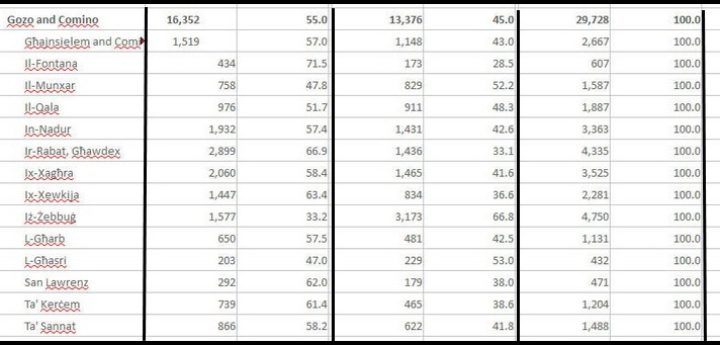
There were 29,728 dwellings on Gozo and Comino at the time of the Census, of these 16,352 were main residential dwellings, or 55%, while 13,376 were secondary, seasonally used or vacant dwellings.
The Gozo and Comino region was one of two regions that reported the lowest proportion of dwellings being in a “good state of repair.” It also recorded the highest percentages of dwellings in need of “serious repairs or being in a dilapidated state.”
The village of San Lawrenz saw a decrease in the total number of dwellings.
Ghajnsielem had the lowest monthly median rental rate in Gozo at €600.
Some 66.8 % of dwellings in Zebbug, which includes Marsalforn, were secondary, seasonally used, or vacant dwellings. This was followed Munxar, which includes Xlendi with 52.2% and Ghasri with 52%.
The table for Gozo below is broken down by locality, main residential dwellings with total and percentage, secondary, seasonally used, or vacant dwellings with total and percentage and the grand total.On a national basis, the Census recorded a total of 297,304 dwellings – an increase of 32.8% since the last Census held in 2011, and a fourfold increase over a century.
The Census found that just over a quarter of these (81,613) were secondary, seasonally used, or vacant dwellings.
The steady growth of 7,345 dwellings per year observed over the past ten years was the largest intercensal growth ever recorded to date.
Primary residences increased at a higher rate (41.2%) compared to secondary, seasonally used, or vacant dwellings (14.8%).
San Pawl il-Bahar emerged as the locality with the largest number of dwellings, with 23,738 or 8% of the total stock.
Compared to 2011, the Census found that the localities of San Pawl il-Bahar, Msida and Mosta experienced the highest increases in the total number of dwellings.
Decreases were recorded in Valletta an Isla. For occupied dwellings, the most substantial increases were seen in San Pawl il-Bahar, Sliema and Msida.
For the first time ever, it was recorded that flats and penthouses dominated as the main places of residence (48.4%), followed by maisonettes (23.9%), and terraced houses (22.7%).
The Census revealed that half of the primary residences were built (or reconstructed) after the year 2000, and a significant shift occurred in favour of flats, penthouses, and maisonettes. It found that the overall condition of dwellings was “predominantly good.”
The region of Southern Harbour was the other region to report the lowest proportion of dwellings being in a good state of repair and the highest percentages of dwellings in need of serious repairs or being in a “dilapidated state.”
The proportion of rented furnished primary residences increased remarkably over the past decade (+13.3 percentage points).
Among furnished residences, the highest monthly median rental payments were recorded in Sliema (€1,150), followed by San Giljan and Swieqi (both at €1,100). Conversely, the lowest rental rates were observed in Birgu (€553) and Zurrieq (€600).
The Census recorded that approximately 50% of the main residential dwellings had either five or six rooms; and a decrease in the average count of rooms was recorded within the past decade (from six to five).
The average number of members residing in main residential dwellings stood at 2.4, with a persistent upward trend in favour of single-member residences.
A total of 51,278 residences, (23.8% of the main residential units), were inhabited by non-Maltese residents.
With reference to latest publication, the NSO said that the following definition applies:
A dwelling is defined as a building or any other housing unit that has been constructed, built, converted, or arranged for human habitation, provided that it is not, at the time of the Census, being used for other purposes.
A dwelling is regarded as a main residence if a person, or group of persons, spend the majority of the year in this place, regardless of temporary absences from the same dwelling.
Dwellings which, at the time of the Census, do not serve as the main residence of at least one person are classified as:
· Secondary or seasonally used (temporarily occupied by a person or group of persons throughout the year, but not serving as a main residence at the time of the Census, e.g. summer residences, dwellings that are used during the working week by persons who are usually resident in another dwelling at their family home, etc.)
· Vacant (unoccupied).
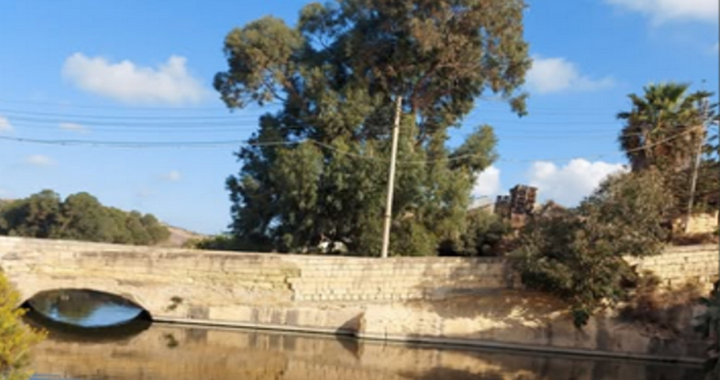
File photo: Gozo News/Alain Salvary
















Whilst iz-Zebbug showed 66.8 % as seasonal, if the figures were split between Marsalforn and the village of Zebbug itself, there would be a much higher percentage in Marsalforn. The village of iz-Zebbug has a big percentage of locals who live there permanently. It would be good to see the actual split between the greater region of Zebbug and the village itself.