Be the first to comment!
Simplifyng process of implementation of EU funded projects
 Email item Email item
|  Print item Print item
|
|
“This government is committed to simplify the process of implementation of EU funded projects for the benefit of the beneficiaries during the newly launched programming period 2014-2020.”
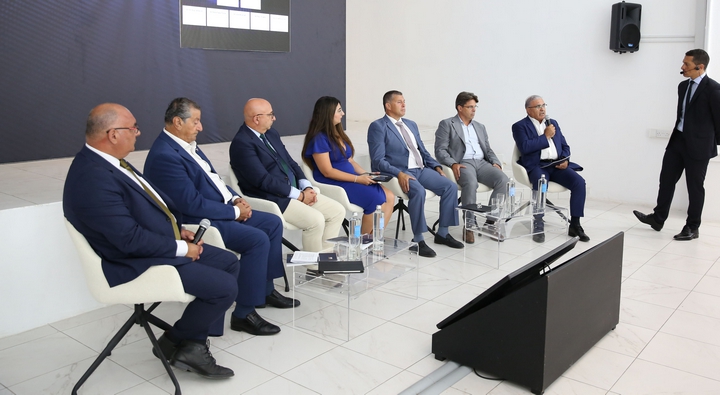
This was declared by the Parliamentary Secretary for EU funds Dr Ian Borg during a seminar on simplified cost options organised by the Ministry for European Affairs with the Cooperation and the participation of the European Commisssion.
Dr Borg said that simplification has been one of the demands for the new cohesion policy legislative package out forwarded to the Commission because, everyone acknowledges that simplification is needed to ensure the smooth delivery of the policy and continued interest of beneficiaries.
The Parliamentary Secretary declared that from previous experience simplification can have a positive impact on the results of the policy by ensuring an efficient distribution of administrative efforts required to implement projects, reducing the time and hence costs incurred to reach the objectives and allowing to focus on results.
In fact Simplified Cost Options (SCO) were adopted by the Commission as a reaction to the fact that majority of errors found by European Court of Auditors in structural actions expenditure was due to the complexity of the rules. The European Court of Auditors had recommended, in its annual report for 2007, to simplify “the basis of calculation of eligible cost and making greater use of lump sum or flat rate payments instead of reimbursement of ‘real costs.’
Dr Borg said that a lot of work has been done since then, with the ‘Recovery Plan’ of November 2008 amending ESF regulation to allow unit costs and lump sums as well as the already available option under the ESF to use flat rate for indirect costs.
The first results obtained are encouraging. In fact, in its 2012 Annual Control Report, the European Court of Auditors has reported that no errors were identified in the sample of expenditure declared to the Commission using one of three Simplified Cost Options.
In the case of Malta the Parliamentary Secretary said that during the Programming Period 2007-2013, Malta introduced for the first time one of the Simplified Cost Options being the ‘Flat rate for indirect costs’, whereby the indirect costs are calculated as a % of direct costs.
An assessment of this initiative was carried out by the National Audit Office while preparing a Performance Report on simplified cost and flexibilities introduced by the Commission and the beneficiaries felt that the measures introduced were deemed to constitute genuine simplification.
In its conclusive remarks the same report by NAO calls for the Maltese Authorities to explore the use of other simplified cost options for the programming period 2014-2020.