Be the first to comment!
Dismantling Fort Chambray barracks “runs counter to international charters and conventions” ICOMOS
 Email item Email item
|  Print item Print item
|
|
 ICOMOS Malta (International Council on Monuments and Sites) has expressed “serious concerns” regarding the proposal to dismantle an entire block of late Victorian barracks at Fort Chambray in Gozo, and to reassemble the outer facade of the building in a different location within the fort (PA 02454/16).
ICOMOS insisted that “the proposed removal and partial destruction of the Late Victorian barracks building at Fort Chambray is therefore unnecessary and inadvisable, and runs counter to international charters and conventions.”
ICOMOS Malta in a statement, stressed that it “considers such an intervention to fall far short of good conservation practice,” on at least three important counts:
“First, the mere retention of the outer shell of a building, while destroying the interior, – an action known as façadism – erases a large part of its historic values and cultural significance. Buildings are a functional whole, and their exterior may only be understood in relation to their interior. The preservation of the interior fabric of a historic building is no less important than its outer envelope. The value of a building is not limited to the aesthetic value of its appearance, but also includes the internal ordering of space, and the building materials, techniques and technologies used (see Article 3 and Article 21 of the Burra Charter).”
“Secondly, the dismantling and removal of a building to a different location disturbs its relationship to its context, and diminishes its legibility and significance. This is particularly evident in a building with a military purpose built within a fortification. Such removal should only be considered as a last resort, when necessitated by overriding considerations. Real estate speculation cannot be considered a valid overriding consideration (See Article 6 and Article 7 of the Venice Charter, and Article 8 and Article 9 of the Burra Charter).”
“Thirdly, the proposal is based on the premise that buildings at Fort Chambray dating from the Victorian period are less worthy of protection and preservation than buildings dating from the period of the Knights of Saint John. This downplays an important chapter in the history of the fort, and goes against a fundamental principle of conservation practice, that ‘The valid contributions of all periods to the building of a monument must be respected…’ (Article 11 of the Venice Charter).”
ICOMOS insisted that “the proposed removal and partial destruction of the Late Victorian barracks building at Fort Chambray is therefore unnecessary and inadvisable, and runs counter to international charters and conventions.”
“The building clearly has architectural, historic, typological, associative and functional values, and is an integral element of the significance and history of Fort Chambray itself. It is a very early example of the concept of married quarters for military personnel, not only in Malta but across the British Empire,” it said.
ICOMOS stressed that “the building clearly merits scheduling, and is comparable to the Verdala Barracks in Cottonera, which are protected with Grade 1 scheduling, as an integral component of British period reuse and adaptation of the Knights’ period fortifications.”
The view of ICOMOS Malta is that “the current proposals to destroy the interior of this building, and to dismantle and partially reassemble its outer walls in a different location within the fort, if allowed to be implemented, would constitute a significant loss to Malta’s cultural heritage, and would go against the letter and the spirit of the Cultural Heritage Act.”
ICOMOS Malta concluded by urging all the authorities concerned to “exercise prudence and to defer any decision regarding this case until after the proper study and scheduling of this building, following which the proposals should be reconsidered and revised accordingly, in the public interest.”
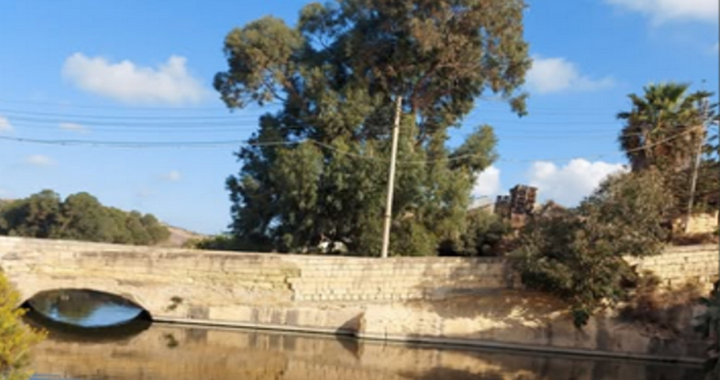
File photo/Moviment Graffitti